PRESIDING OFFICER ESCUDERO
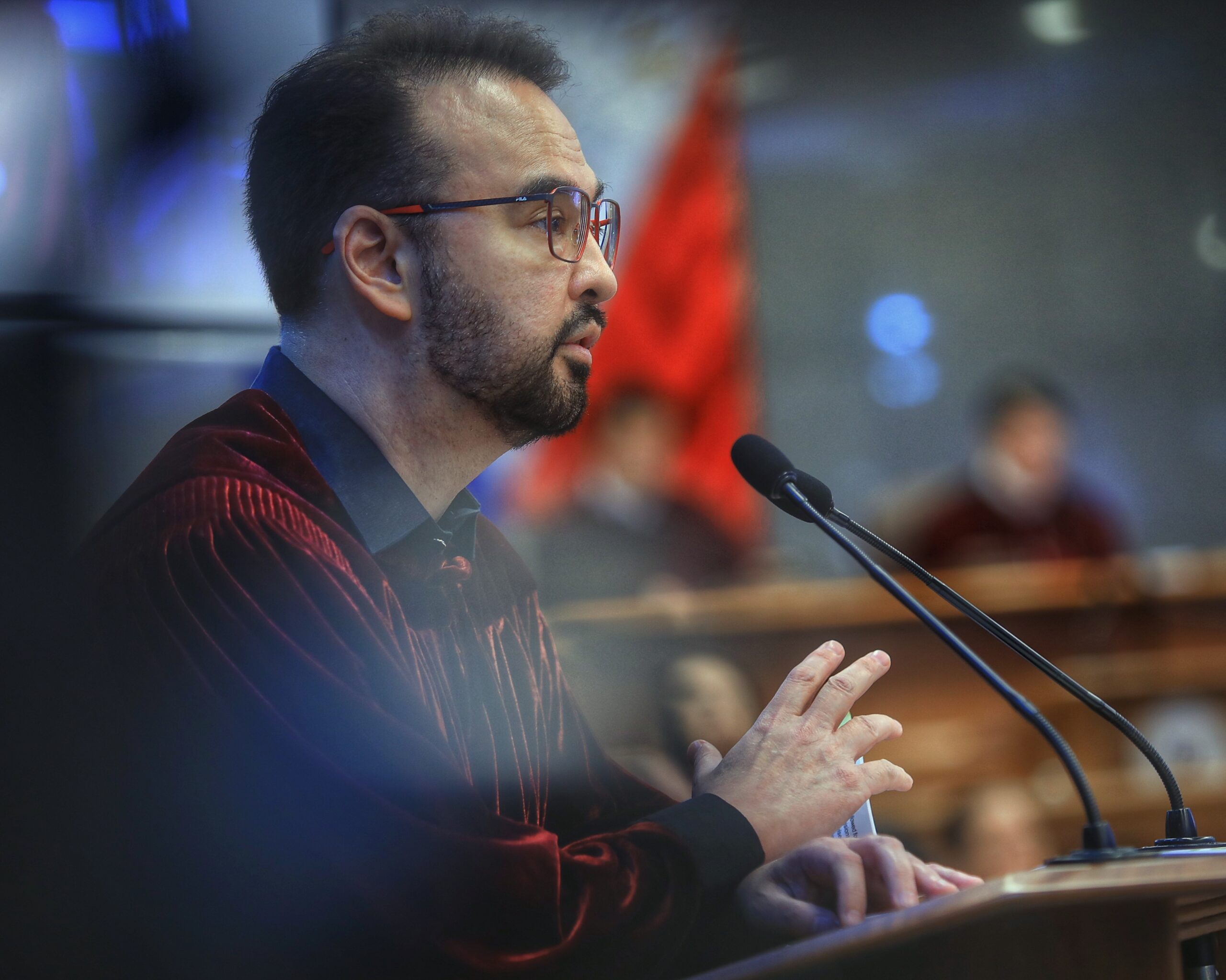
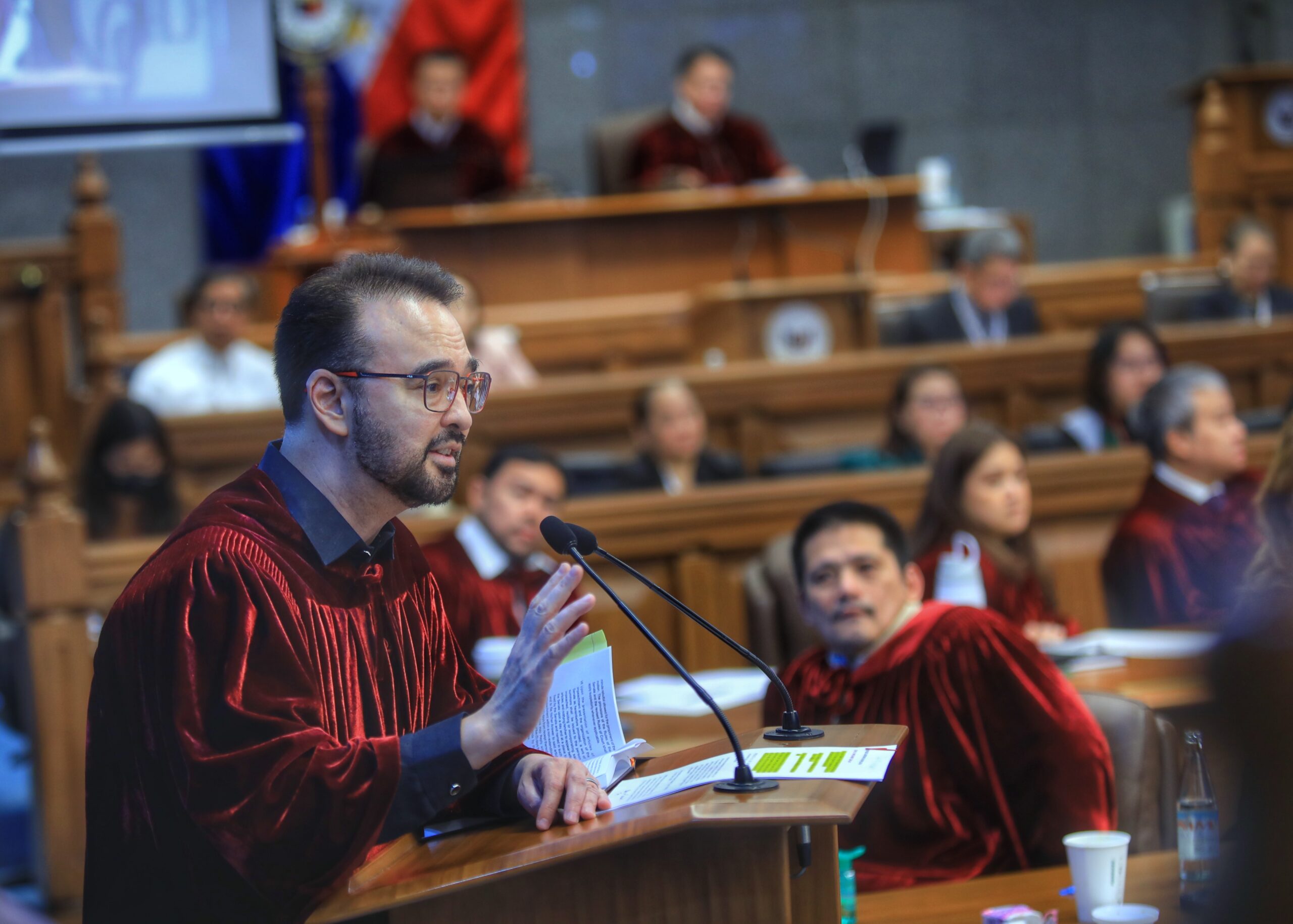
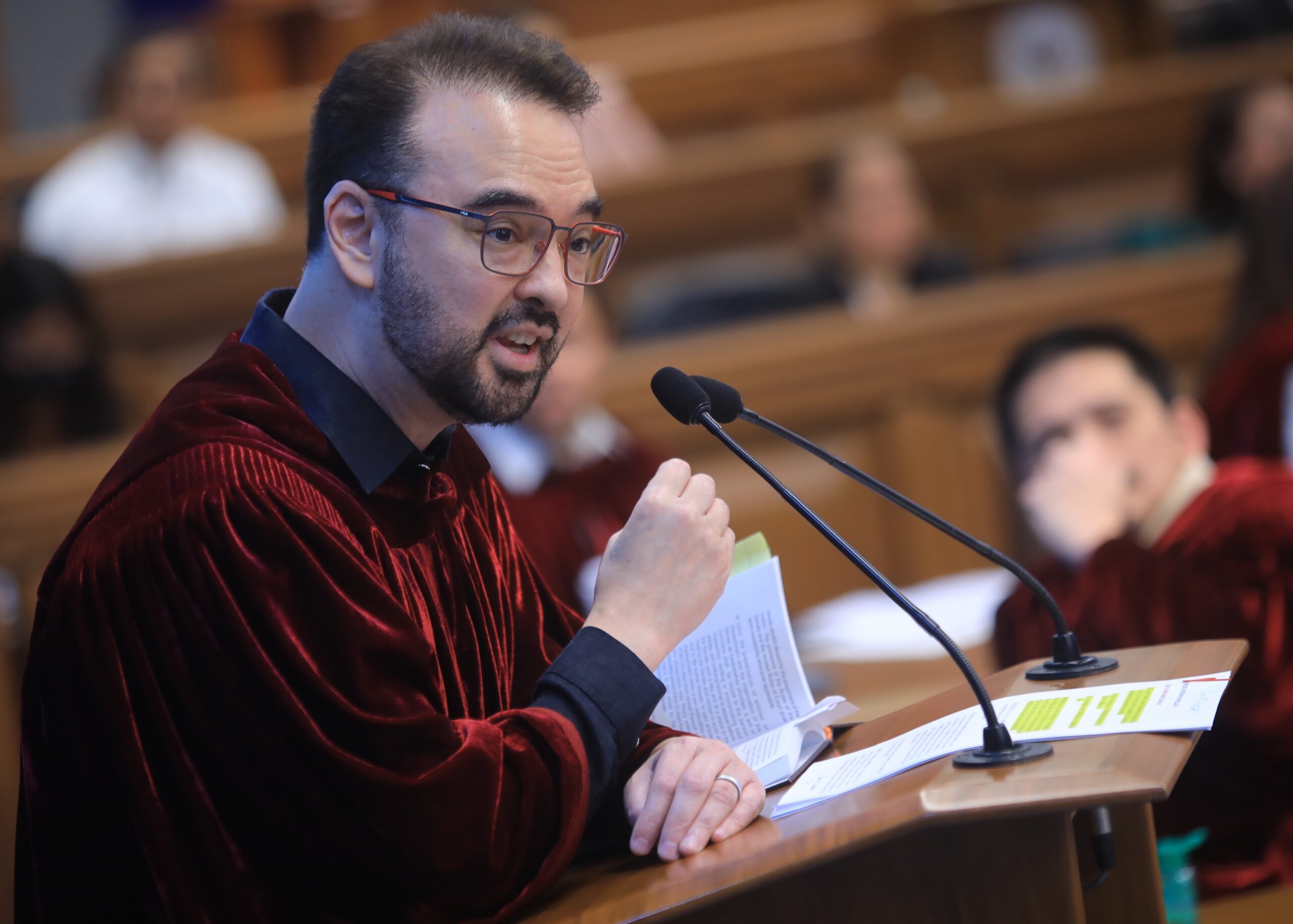
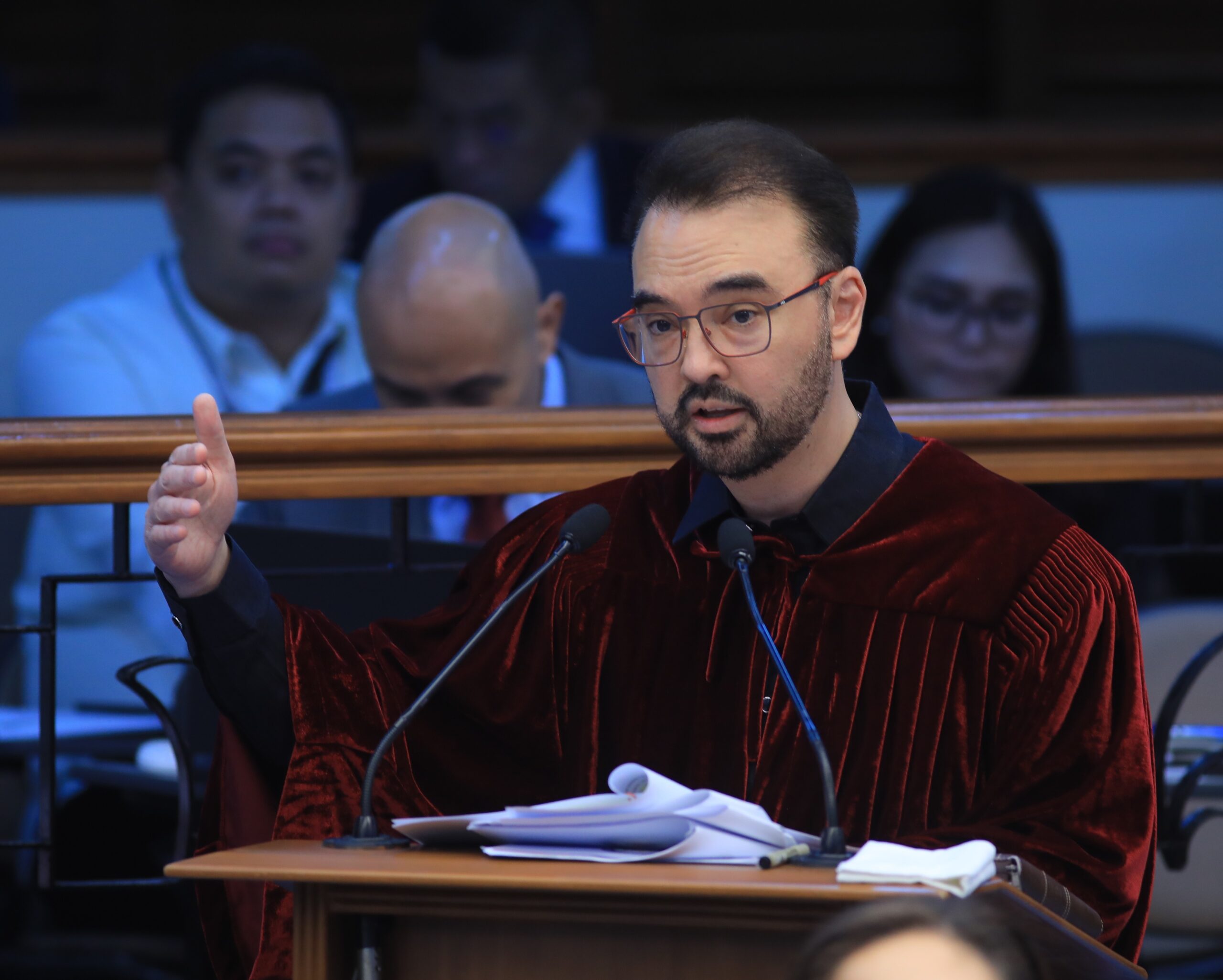
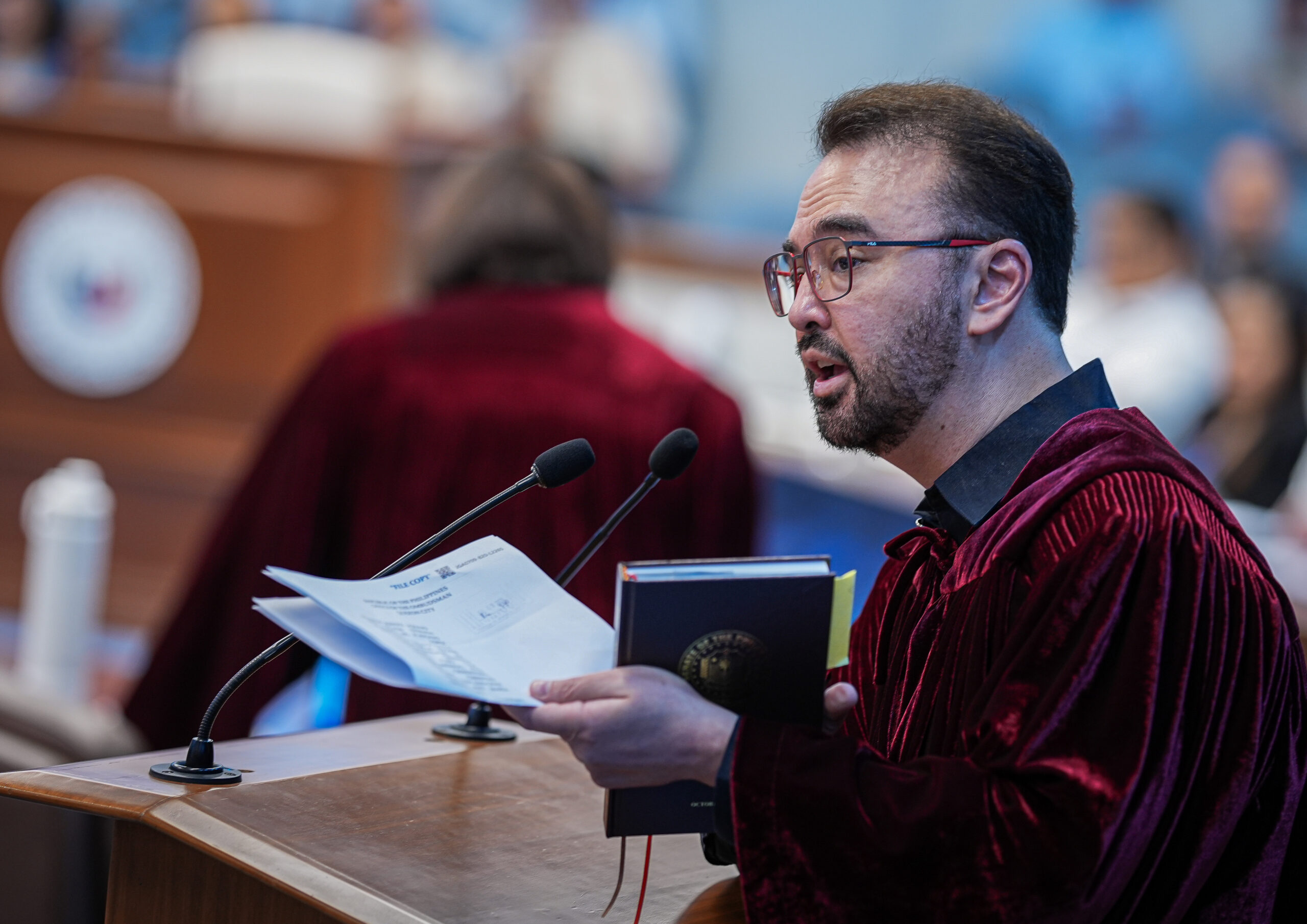
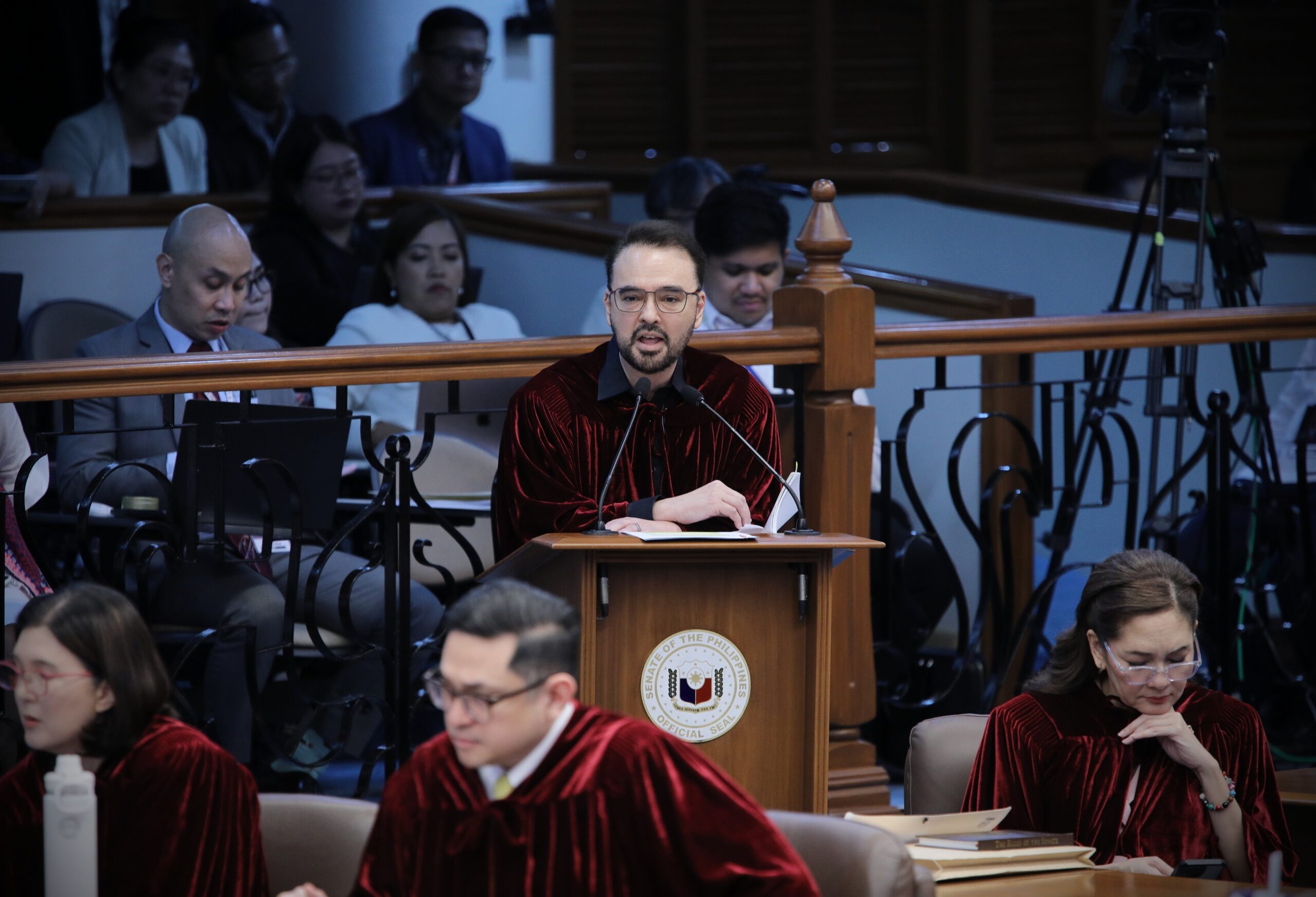
(0:00:00) We shall resume the interventions of Senator Judge Allan Cayetano pertaining to the issue at hand on the twin request for subpoena by the prosecution. You may proceed, Senator Judge Allan, when you’re ready.
SENATOR-JUDGE ALAN PETER CAYETANO:
(0:00:15) Mr. Presiding, if I may start there, whether or not the defense, although they stated already in their opening statement, considers such statement in the Duterte case as Obiter Dictum, and I’d like to reiterate, it’s very important that we all understand and come to our own conclusions because many, many times during this trial, and even in the decision we’ll have to make, this question will play a center, will be front and center. So may I ask the attorney power, do you think that statement was a Obiter Dictum?
DEFENSE POA
(0:00:48) As stated, Your Honours, thank you for the question. As stated last week, Your Honours, it is our position of the defense that that is not obiter dictum. Precisely because, Your Honours, it is our theory that when the Supreme Court decided the case of Duterte v. H.O.R.,
(0:01:07) The point that the one-year bar was triggered, precisely because there was a violation of due process, that’s why if you read the decision, Supreme Court, through the words of, of course, Senior Associate Justice Marvick Leonin, painstakingly discussed
(0:01:28) what due process is actually in an impeachment proceeding. And in fact, there was a line in that decision that says that they wanted to clarify the guidelines on impeachment proceedings. Further to that, Your Honor, hindi lang po sya decision, pero pati po doon sa binibigay na primer or summary ng Supreme Court bago nila ilabas yung buong decision, they enumerated the guidelines which were around seven points if I’m not mistaken. And the sixth point is actually on what is an impeachable offense. And in fact, we have prepared copies of that primer for the senator judges which we can distribute so that makita po nyo na while ang effect ay na-trigger yung one-year bar, It was really due process that the Supreme Court was discussing in that case to guide.
PRESIDING OFFICER ESCUDERO
(0:02:28) Yes. Commission, counsel, correspondent, kindly submit that to the clerk of court.
DEFENSE POA
(0:02:30) Yes, Your Honors.
PRESIDING OFFICER ESCUDERO
(0:02:33) Thank you. You may proceed, sir.
DEFENSE POA
(0:02:35) So, while the, as I was saying, Your Honors, while yung ang end result is na-trigger yung one-year bar, and that’s why void yung naging first round of impeachment, ang talagang pinag uusapan ng Supreme Court dito is the observance of due process in every stage of the proceeding. And that is why very important na mapag usapan natin na ang kasama dun is really kung ano ba talaga ang isang impeachable offense.
(0:02:48) At nakasulat doon, if I may quote, “The basis of any charge must be for impeachable acts or omissions committed in relation to their office”. meaning in relation to their impeachable office and during the current term of the impeachable officer. So that is why, Your Honours, it is a view of the defense na hindi po obiter lang itong pronouncement ng Supreme Court na to as to what constitutes as an impeachable offense.
SENATOR-JUDGE ALAN PETER CAYETANO:
(0:03:37) Yes, I’m not texting. I got on my phone the Duterte versus House of Representatives because, of course, my follow-up questions was to get into the mind of the prosecution when to apply the Duterte case and when not to. But I’ll still ask you the same question. So is it what’s more logical that the due process requirement that the acts committed should have been on the term is also applied to the other modes or just to the one third mode.
DEFENSE POA
(0:04:13) All modes of impeachment, Your Honor. That is our position. Kasi po, we would veer into absurdity, no? Na kung doon sa one-third mode tayo, ang impeachable offenses, limited lang sa term, pero pagdating doon naman sa other mode, which dinaanan, admittedly, yun ang dinaanan itong current proceedings natin, e mag-iiba ang definition ng impeachable offense. I do not see any logic on why there is a difference, because an impeachable offense is an impeachable offense.
(0:04:43) So, para po sa atin, that should apply. And in fact, the Supreme Court did not make a distinction as to the guidelines that it laid down in that decision, Your Honors, please. Yeah,
SENATOR-JUDGE ALAN PETER CAYETANO:
(0:04:57) in the first page, sabi dito, second, considering the nature of the offices and the institution that are subject to impeachment, In effect, its effect on the independence of constitutional departments and organs, and its nature as a constitutional process, all legal issues involving impeachment proceedings are subject to judicial review. While the court does not determine when, who, and whether an impeachable officer may be removed and disqualified from political office, it has the duty to construe and cross process mandated by the Constitution. So is this for you part of the rational decision or is this a Obiter Dictum?
DEFENSE POA
(0:05:37) Rational, Your Honors. In fact, that’s why the Supreme Court when it started the decision said that the end does not justify the means. Because it was precisely discussing the means. Ano ba yung dapat nating sinusunod na proseso?
SENATOR-JUDGE ALAN PETER CAYETANO:
(0:05:51) So since we’re talking about subpoenas, we’ll go to the end and the means to justify things.
PRESIDING OFFICER ESCUDERO:
(0:05:57) With the permission of Senator Judge Allen, I would just like to get the assent of the counsel from the panel of prosecutors. The documents ought to be distributed by the counsel correspondent is a July 25, 2025 discussion on the Duterte v. HOR. on the one-year bar rule. Again, it’s dated last year. With the permission of the prosecution, we shall distribute it without prejudice to the council for the panel of prosecutors to also furnish whenever it shall so desire because this issue, as pointed out by Senator Judge Cayetano, will linger until the end of the proceedings without prejudice to the counsel from the panel of prosecutors to so furnish also. Senator Judges with their rejoinder to this document being furnished to the senator judges. Is that okay?
PROSECUTOR DIOKNO:
(0:06:57) Your Honor, I believe that, first of all, may we request for a copy of that document. I believe that document refers to the Office of the Spokesperson? That’s correct. Of the Supreme Court. In which case, Your Honor, we would have to interpose an objection because any interpretation by the Office of the Spokesperson is not binding on the Supreme Court. What we must look at are the actual texts of the decision.
PRESIDING OFFICER ESCUDERO
(0:07:22) Well, counsel, you can say that in your rejoinder. Point that out in your rejoinder and point that out in your submission. We will do that, Your Honor. So ordered, Clerk of Court is directed to kindly distribute the copies to the senator judges without prejudice to the panel of prosecutors submitting a rejoinder to this document Senator Judge Alan Cayetano, you may proceed, sir.
SENATOR-JUDGE ALAN PETER CAYETANO:
(0:07:48) To be fair to the… I wouldn’t have objected if you objected to the distribution, but realistically, we won’t have time to read it because after. So it’ll be more of reference materials. But feel free also to, if you feel that you should submit in writing a rejoinder to be fair to everyone. So if the voting was tomorrow, it would be unfair to distribute it. So can I ask the same question, Congressman? So I read, it’s the first few paragraphs. You heard me naman, you want me to read it again?
PROSECUTOR DIOKNO:
(0:08:25) if i may be allowed to respond already to the question well first of all your honor i think we must point out one of the plainest reasons why that statement in the duterte ruling is obiter dictum and that simply is because there was no trial yet to speak of when the supreme court rendered that decision. Paano po magiging issue yung nangyayari ngayon sa trial samantalang nung dinisisyunan po yan, wala pa pong trial.
(0:08:49) Therefore, any statements by the court about how the trial should be conducted are outside the issues of that case and while they may be guidelines, they are not binding as judicial precedent to us and to the future generations.
SENATOR-JUDGE ALAN PETER CAYETANO:
(0:09:15) Actually, I was referring to a different matter already, but just to that point, it’s not how, it’s what. It’s paragraph six. The basis of the charge must be for impeachable acts or omissions committed in relation to their office and during the current term of the impeachable officer. For the president and vice president, these acts must be sufficiently grave amounting to the crimes described in Article 11, Section 3.1 of betrayal of public trust given by the majority of the electorate.
(0:09:49) For the other impeachable officers, the acts must be sufficiently grave that they undermine and outweigh the respect for their constitutional independence and autonomy. So this doesn’t really tell as how to conduct the trial. This basically tells us is that if we don’t follow that, we’re endangered of having a trial that’s void ab initio.
PROSECUTOR DIOKNO:
(0:10:10) I would have to respectfully disagree, Your Honor.
SENATOR-JUDGE ALAN PETER CAYETANO:
(0:10:14) Anyway, we’ve gone through that argument, and I won’t argue with both of you. Going back to that, this is what I read, no? Second, considering the nature of the offices and the institutions that are subject to impeachment, it affects on independence of constitutional departments and organs, and its nature as a constitutional process, all legal issues involving impeachment proceedings are subject to judicial review. I’ll stop there.
(0:10:37) May I speak English-Filipino? That’s for us to decide. And my interpretation, and I felt like that many, many times, na zealous dapat ang impeachment court sa powers niya, kasi not only because it’s sui generis, wala nga tong, wala tong, Apologize to Senator Judge Risa, my phone fell. So wala nga tong, you cannot appeal the decision of the, my belief, you cannot appeal the decision of to acquit or to convict to the Supreme Court. But the parameters, so let me use the words of the Supreme Court. Ang sabi niya,
(0:11:30) “All legal issues involving impeachment proceedings are subject to judicial review”. You disagree with this or you agree? In context nung sinabi mo kanina na it’s within our power to make these decisions.
PROSECUTOR DIOKNO:
(0:11:46) I believe what is the controlling decisions there, Your Honor, are the cases of Gutierrez and Francisco because in those cases the issue of what is an impeachable offense was squarely brought before the court and the court said very clearly that that is purely a political question that’s not within the judicial power for us to decide and I believe that that should be the controlling jurisprudence.
SENATOR-JUDGE ALAN PETER CAYETANO:
(0:12:13) So let me be more specific so for example we issue some subpoenas and we do not issue some can one or both of you, meaning the prosecution and defense, go to the Supreme Court and question it?
PROSECUTOR DIOKNO:
(0:12:25) Well, there is always the possibility that some side, perhaps the defense, may claim that there is a grave abuse of discretion, I believe, as they have done in other petitions filed, and therefore make an attempt to stop the proceedings before this court. But as I have said last week, Your Honor
(0:12:45) In our opinion, this court has the sole and exclusive power to decide what an impeachable offense is, and no one, not even the Supreme Court, can dictate on this court in making that decision.
SENATOR-JUDGE ALAN PETER CAYETANO:
(0:12:59) Same answer.
DEFENSE POA:
(0:13:02) No, Your Honor. I have a different answer.
SENATOR-JUDGE ALAN PETER CAYETANO:
(0:13:04) Okay, you can go back to that question, and my follow-up question was, so let’s say certain orders of the court, can the prosecution or defense go up to the Supreme Court and question its constitutionality?
DEFENSE POA:
(0:13:13) Yes, Your Honor. It is our position that either of the parties can do that. Why? Because the Constitution cannot be read in isolation. So while the Constitution gives the sole power to the Senate to try an impeachment case, to try and hear an impeachment case, we must read this in conjunction with, again, Article III, Bill of Rights, and Article VIII, specifically Section I, which is the power of judicial review. So, pag sa tingin po ng isang panig, merong grave abuse of discretion na naganap, we are of the position that, in fact, this is a justiciable issue and can be brought before the Supreme Court, Your Honor.
SENATOR-JUDGE ALAN PETER CAYETANO:
(0:13:55) So, at least in that small point, I think we all agree that if we think there’s grave abuse of discretion, there’s a possibility that the Supreme Court will take it up. I’m not referring to the subpoena, I’m talking in general. So I’ll skip a few pages of my questions precisely because I wanted to elicit your opinions or your stand regarding the fact that the impeachment court is supreme, but it’s not true that we can do anything or we can just make decisions that are not based on statutes and on legal orders. In fact, when the Supreme Court issued a TRO regarding the foreign accounts or the dollar account in the Corona case, the impeachment court voted to respect the TRO. But of course, we did vote. So there could have been a constitutional crisis if we voted not to. And then, of course, we know because of history, nag-waiver na lang si Chief Justice Corona. So can I go now to the ultimate facts?
(0:15:07) I don’t know if Senator Joel, but Senator Pia asked a little bit about this. Just a quick review, or maybe… So, we’re also governed by the rules of court when it comes to ultimate facts. This is what Section 1 says. In general, every pleading shall contain in a methodological and logical form a plain, concise, and direct statement of the ultimate facts, including the evidence on which the party relies on his or her claim of defense, as the case may be, if a cause of action or defense relied on is based on law, the pertinent provisions thereof and their applicability to him or her will be clearly and concisely stated. So does the two counsels agree that it’s the ultimate facts, you have to include the evidence?
PROSECUTOR DIOKNO:
(0:15:53) I would make a distinction, Your Honor, between what we call ultimate facts and evidentiary facts, which are the pieces of evidence that could be used to come to the conclusion or to decide whether those ultimate facts are present in the case or not. Yeah.
SENATOR-JUDGE ALAN PETER CAYETANO:
(0:16:09) I think all of us lawyers agree with that. There’s a difference between ultimate facts and evidentiary facts. But the rules of court says, including evidence. Kasi kung walang including evidence, de ang kailangan mo lang i-file, ultimate facts. Pero pag sinabing kasama ang evidence, I don’t, for me, it doesn’t mean that every single testimony, every single document should be attached. So let me go to my second question. So pwede bang sa articles of impeachment, ultimate facts lang, walang naka-attached na evidence?
PROSECUTOR DIOKNO:
(0:16:45) Ang requirement kasi sa pleading ay dapat nakasaad ang ultimate facts. But if you look at the articles of impeachment that are before this court, it also contains evidentiary factual allegations to support the ultimate facts that are contained therein.
SENATOR-JUDGE ALAN PETER CAYETANO:
(0:17:02) Thank you for that answer. Actually, that was my next question. Did it contain? And you answered it. So, with respect to the Sabalia and Cabrera impeachment complaints, is it correct that there was no authentic records that were attached when they were filed? Factual lang tong tanong ko.
PROSECUTOR DIOKNO:
(0:17:19) If Your Honor, please, first of all, I would have to raise an issue with respect to whether this Honorable Court is acting as an appellate or review court of what happened during the House proceedings. The power to initiate an impeachment complaint is exclusively lodged with the House, while the power to try and decide that the impeachment case is exclusively lodged with this Honorable Court. And I don’t believe that it is part of the function to go back to what may have happened during the proceedings before the House, since the articles have already been transmitted to this Honorable Court.
SENATOR-JUDGE ALAN PETER CAYETANO:
(0:17:58) Well, Counsel, even your students, colleagues, recognize that you are a brilliant man, you’re very well – learned sa law, but minsan mabilis kasi actually that’s not where I was going. So two of my colleagues started with, or in your discussions, ano yung fishing expedition going down to ultimate facts and evidentiary. Ako, I wanted to distinguish when is it a fishing expedition and when it’s not. So I just wanted to know as a fact, Or can we take judicial notice that there was no authentic records in the Sabalia and Cabrera?
PRESIDING OFFICER ESCUDERO
(0:18:44) What’s the point again, Senator? Just there were no authentic?
SENATOR-JUDGE ALAN PETER CAYETANO:
(0:18:47) It was just preliminary because I wanted to compare it with other impeachment complaints. And I wanted to ask the question. When is it a fishing expedition na hindi? So these are legitimate questions. So, factually, yung Zabalia and Cabrera ba may authentic records attached? Ang information ko wala. But I don’t want to…
PRESIDING OFFICER ESCUDERO
(0:19:12) I believe, Senator Judge Allan, that the Zabalia and Cabrera complaints were attached as an annex. If I’m not mistaken, to the respondent’s answer. Would that be correct, attorney po? And to be fair, it was… As well as the annexes. In fact, the presiding officer noticed that it lacked a page in one of the annexes to the, I think, Zabalia complaint, which he pointed out. So that’s a fact. So it’s in the records, Senator Judge.
SENATOR-JUDGE ALAN PETER CAYETANO:
(0:19:40) So in the absence of authentic supporting record, what factual basis did the prosecution rely on to say that allegations were sufficient in form and substance?
PROSECUTOR DIOKNO:
(0:19:53) If I recall correctly, Your Honor, please, there were some attachments to both complaints, and I’m not aware of any rule in the House of Representatives as far as impeachment cases are concerned that limit what may be discussed or investigated by the committee to only what is contained and attached to the impeachment complaint.
SENATOR-JUDGE ALAN PETER CAYETANO:
(0:20:15) I’m not questioning if there’s an attachment. I’m questioning whether there was… I’m asking question. I’m not even questioning it. I’m asking questions on if there were authentic records. So I’ll move on In the complaint against President Bongbong Marcos, the finding was the complaint failed to establish any factual nexus between the president and an impeachable offense. What are presented were policy and disagreements and generalized accusations, not ultimate facts. Yun ang finding ng Committee on Justice. Correct?
PROSECUTOR DIOKNO:
(0:20:53) Yes, Your Honor, to the best of my recollection.
SENATOR-JUDGE ALAN PETER CAYETANO:
(0:20:56) So that’s my question. After answering that question, does the prosecution agree that the requirement of alleging ultimate facts applies equally to all impeachment complaints, regardless of if it’s the president or the vice president, regardless if it’s the ombudsman or the co-chairman?
PROSECUTOR DIOKNO:
(0:21:13) Yes, Your Honor, and as I recall, when the members of the committee examined the complaint filed against the President, the conclusion of the committee was in fact that there were only conclusions of law contained in that complaint, not allegations of ultimate facts.
SENATOR-JUDGE ALAN PETER CAYETANO:
(0:21:33) Yes, yet in that complaint there were authentic documents attached authentic records, and the House did not ask to subpoena the AMLA, BIR, and bank records of the President.
PROSECUTOR DIOKNO:
(0:21:53) The requirement, if Your Honor, please, of ultimate facts is really based on what is alleged in the petition or complaint itself.
SENATOR-JUDGE ALAN PETER CAYETANO:
(0:22:00) But what was the exact words of the counsel? Ang katotohanan ay hindi …?
PROSECUTOR DIOKNO:
(0:22:05) Confidential
SENATOR-JUDGE ALAN PETER CAYETANO:
(0:22:06). Hindi confidential. So why in the case of President Marcos is the katotohanan confidential but in the case of Vice President Sara, it’s not confidential?
PROSECUTOR DIOKNO:
(0:22:17) Wala naman po akong maalala na ruling ng committee in case of the president na meron silang sinabing confidential. What I recall is that the conclusion was that the complaint did not allege ultimate facts.
SENATOR-JUDGE ALAN PETER CAYETANO:
(0:22:32) So there was a conclusion even before asking for all of this. But in this case, there was a conclusion that there’s no nexus between the president and an impeachable offense. In this case. Walang authentic documents, pero humihingi ng supina kasi yung katotohanan hindi confidential. So, which goes to my, well, first, let me honor who I should honor because it seems that the Lisa Massa complaint, which was endorsed by ACT partylist was here and I think Antonio Tinio, I think Sara Elago was here the last last week. And I think representative Co was here. So in their case, I can say walang selective justice because they wanted the same standards of president and vice president. So that’s my next question. We want fairness for everyone and for the Filipino people, but would it be unfair to require 20 years of documents from AMLA, BIR, and bank accounts from Vice President Sara without requiring the same from President Bongbong, considering that all of these scandals is happening during his administration?
PROSECUTOR DIOKNO:
(0:23:54) If the allegations of the complaint against the President did in fact contain ultimate facts, I would see no reason why the Committee on Justice should not have proceeded with it.
SENATOR-JUDGE ALAN PETER CAYETANO:
(0:24:05) So I’ll take that answer. May I ask the same question? Rule 8, ultimate facts including evidence. So the answer of the prosecution was that, basta’t may evidentiary facts. But ang nakalagay kasi sa section 1 ng rule 8, including evidence, what is the position of the defense on this?
DEFENSE POA:
(0:24:26) The defense follows strictly the rules, Your Honours. While I agree with the distinguished opposing counsel, na iba yung ultimate facts and evidentiary facts. I don’t want to blur that line. Tama naman po yung sinabi ng ating opposing. But yun nga po yung punto namin. In the Sabalia and Cabrera complaints, wala pong ultimate facts at wala din pong evidence or evidentiary na nakakalakip doon po sa mga complaints, which is the very issue that we brought up to the Supreme Court, Your Honor.
SENATOR-JUDGE ALAN PETER CAYETANO:
(0:24:57) So if you were representing now the President and the opposing counsel was also asking for 20 years of records of AMLA bank accounts and BIR, would you still have the same position? That unless it is relevant and definite. I read in your pleadings, in your position paper,
(0:25:25) So, kasi may, I’ll ask na rin my next question. Why is it definite in your view?
DEFENSE POA:
(0:25:30) Okay. So, on the first question, yes, Your Honor. Even if I were to be representing the President now, I would have the same view, no, na hindi pupwedeng ganun ka 20 years ang span ng mga documents na hinihingi, precisely because the jurisprudence provides that for a valid subpoena to issue, it must be particularly described, plus yung sinasaya po natin na relevance. Now, to the second question as to why it is not particularly described, Your Honors, unang-una, let’s start with the bank accounts. Yung bank accounts na naka-enumerate sa kanilang request,
(0:26:06) It is our position na yun po yung natawag kanina na Fruit of the Poisonous Tree. Because as you can see, lahat po ng pinanggalingan na accounts na yan ay yung AMLAC, which we are contesting. Sa amin po, ang lawful po yung naging disclosure sa Committee on Justice. But more importantly, pangalawa,
(0:26:24) Aside from just the mere bank accounts, the documents they’re asking, Your Honors, while they are specified, kung titignan mo talaga ng mabuti kung anong hinihingi nila, they’re asking for all bank records without any assertion as to why all of these are relevant to prove whatever allegation they have stated in the Articles of Impeachment.
SENATOR-JUDGE ALAN PETER CAYETANO:
(0:26:47) I’ll skip many questions here and go to that question. But to be fair, Congressman Diokno, you said that’s an exclusive authority, right power of the house.
SENATOR-JUDGE ALAN PETER CAYETANO:
(0:27:00) So if I want to question the difference, I’ll do that in either the Senate or as a private citizen. So I won’t go into that. But I ask that now in context of whether or not the certain parameters in the subpoena you’re asking for is valid or not. So let me just go to this series of questions. This is really a discussion into what is substantial facts, what’s ultimate facts, what’s essential facts, what are and as you said, Attorney Poa, we don’t want to bore everyone with that. But it’s important in terms of due process.
(0:27:43) So, basically, the ultimate facts are that establish the charge, in this case, unexplained wealth. So let me put it this way in my question to attorney and congressman, prosecutor Diokno. So like if I say that may kilala akong politiko, commissioner ng ganito, or congressman, senator, whatever. Ang salenya was one peso, or what’s a reasonable amount. SALN was one million, 20 years later, it’s 20 million. Versus the commissioner of BIR, in five years, it gained 50 million. Compared to this congressman, ganito. Then I said, eto lang income niya unexplained wealth yan.
(0:28:32) In your view, is that sufficient na for the impeachment court then to issue the subpoenas or do you have to specify na.. for example, you say that that commissioner, sa SALN niya he only had two cars, but he actually has more than four. Therefore, paying subpoena para sa LTO. O that commissioner, ang sabi niya, isa lang ang bahay niya. Pero subpoena sa LRA kasi apat ang nakita namin. Kasi on the later examples, medyo mas malinaw yung ultimate facts.
(0:29:05) Pero pag sinabi mo lang eto SALN, eto tumaas, which was my point actually in my last few vlogs that just because tumaas yung SALN, that doesn’t mean that there’s ill-gotten wealth. But my question there was does that give us now the authority to get the bank accounts, the AMLA and the BIR. Because whatever we do in the impeachment court is for impeachable officers. But nanonood din yung Sandigan Bayan, nanonood din RTC, MTC, nanonood din yung Supreme Court. So whatever rule we have here, that will influence then how we deal with barangay captains all the way to anyone who’s not impeachable, noh?
PROSECUTOR DIOKNO:
(0:29:50) For unexplained wealth, Your Honor, I believe the ultimate facts must include the following. First, that the person involved amassed wealth. Second, that that wealth is manifestly disproportionate to that person’s lawful income. So kailangan po natin makita kung ano yung kanyang kayamanan at kailangan natin ikumpara doon sa lehitimo niyang kinita. And that can be only determined by looking at the records that we are requesting from this Honorable Court.
SENATOR-JUDGE ALAN PETER CAYETANO:
(0:30:22) No, but if you’re just looking at the SALN at yung kinita niya, so I’ll give you an example. I won’t name the person para walang mag-react. But he was senator, I think, in 1987, an outstanding human being. And he was telling us, etong lupa na to, nabili ko ng 1980 o 1970 na 50,000. Nabenta ko ng 1990. E kaya lang sa SALN, ang nakalagay kasi doon yung acquired cost.
(0:30:50) So, nilagay ko 50,000. So, kung titignan mo kami, then he named some great, other great senators, etc., nakasabayan niya, congressman at dito, titignan mo, si senator ganito, kami lahat. O, ang SALN namin, baka 5 million. Pero yung 100,000 na lupa na binili namin noon, baka 5 million, 20 million, 30 million.
(0:31:10) So, if one of those officials, suddenly sold the property and then placed the money that came in, so let’s say the 100,000 property was sold for 5 million, but then for example, pinang-blow out niya sa pamilya yung 500,000 before December 31 of that year, mag-i-increase yung kanyang SALN by 4.5 million. So if you just compare his income na sweldo niya with that, that will not show you that he has ill-gotten wealth.
(0:31:41) So compared na pagka-ina-ledge ko na ang sweldo niya 200,000, eto, pero bakit may bahay siya sa ganito, ganito-ganito, na wala sa SALN niya. So I agree, nasundan natin yung ebidensya. If the SALN is much more than what you’re making, that could spark your curiosity, your suspicion, and continue to investigate. But do you make the conclusion now and file the impeachment case that since malayo yung SALN sa income, therefore ill gotten yon without giving that person a way to explain before you subpoena every single document about their lives.
PROSECUTOR DIOKNO:
(0:32:20) That’s precisely why, Your Honor, they call it unexplained wealth. Doon po natin malalaman yan sa mga dokumento. I’m sorry, Your Honor. I’m sorry. I’m the one. Please continue. Kung halimbawa sa binigay niyong example ay nag-appreciate yung value of the land, then I would not call that unexplained. I would call that explained wealth.
SENATOR-JUDGE ALAN PETER CAYETANO:
(0:32:45) Yes, but you’re introducing a new concept now, unexplained wealth versus ill-gotten wealth. I agree with you. Unexplained wealth is that if you look at the SALN, at hindi ito tumutugma, may unexplained wealth. That’s why you ask them to explain it. And then pag hindi maganda yung explanation, and may ebidensya ka, then you can go against that person for ill-gotten wealth. But like in certain parts here, I saw some… that I would consider even without asking you evidence. But for example, yung mga kumpanya. Sabi dito, lugi yung kumpanya. So kung lugi yung kumpanya, hindi makakakontribute yun sa kanyang ill-gotten wealth kung meron man. So why are we getting all the documents about those companies? Doon pumapasok yung criticism ng iba. Is this a fishing expedition?
(0:33:38) Kasi if I had five companies and they were all making money, and supposedly I only own 1% of that company, but I’m getting half of that income, I would agree with you, is subpoena lahat yan. Tignan natin yung flow niyan, baka yan yung pumasok sa akin. Pero lugi nga yung mga kumpanya. As an example, so that’s my point. Is it enough in the view of the prosecution panel, just to allege, malaki yung salin mo, bigger than your monthly sweldo, both of us agree, it’s unexplained. But is it ill-gotten or do you need more allegations to show that it was ill-gotten?
PROSECUTOR DIOKNO:
(0:34:19) Your Honor, please, the decision whether wealth is unexplained or, as you said, ill-gotten, is really a decision that this Honorable Court will make based on the evidence. Ang gusto lang po namin ay mailatag ang ebidensya sa inyong harap para kayo na mismo ang magsabi at para malaman ko yan ay we have to look at the statements of assets, liabilities, and net worth.
(0:34:44) We have to look at the lawful income reported in the ITRs. We have to look at the bank records in terms of kung ano yung pumasok at lumabas sa kanilang mga accounts. As far as the businesses are concerned, that has to do with the third sub-charge under unexplained wealth. Yun pong continuing to participate in business interests despite the clear and express prohibition provided in the Constitution. We want to know whether those businesses, yung ba ay mga operational ba ito? Ito ba ay talagang sasabihin natin na nandun yung sinasabing inaamin ni Vice President sa kanyang SALN na business interest nga niya yun.
SENATOR-JUDGE ALAN PETER CAYETANO:
(0:35:32) Yeah, I’m skipping because this is mostly questions on fishing expedition. I’ll go to the defense after this, but can you tell us the difference between evidence and proof? In your layman’s term or legal terms, or if you want to look it up, but how do we explain to people the difference between evidence and proof?
PROSECUTOR DIOKNO:
(0:35:57) Napakabigat po ng inyong tanong. I will try my best, your honor, to answer it. In a court proceeding, whether we’re speaking of an impeachment court or a regular court, the judges look at the evidence. They may never be able to know the entire truth. Kasi ang pangyayari ay nangyari dati pa po. Essentially, a trial is really a reconstruction of something that happened before. So it may happen in some cases, that there is enough evidence to make conclusions as far as the judgment is concerned, even if the members of the court did not get to see the entire truth. Yes. Ang gusto po namin maiwasan na dito sa impeachment court ay meron po tayong hindi mailatag na ebidensya sa mga mahistrado po na nandirito para talagang maging buo yung larawan nila bago po kayo magpapasya.
SENATOR-JUDGE ALAN PETER CAYETANO:
(0:36:54) I don’t think there’s any question that all of us here want na mailatag yung ebidensya. The question is, do you have the evidence or are you fishing for the evidence? And that’s a question not only for you, but for every single impeachment process, not only the umabot dito, because myself, Senator Zubiri, Senator Chiz Escudero then later on Senator Villanueva has been in the House with in many times during impeachment of presidents and chief justices but the reason I asked between evidence and and proof is because if you have the the evidence you want the opportunity o bring it here, show the relevancy, connect it to the crime, we admit it so that if it’s true, then we can convict.
(0:37:44) The opposite sides will either question, hindi admissible yan or admissible, pero walang relationship yan, etc. So what I’m saying is that if you’re going to prove your case with no evidence, except that if you get all of that..
(0:38:02) Then, magiging arbitrary yung House of Representatives, sinong gusto nilang i-impeach because almost any public official who’s been there for a long time, you will see discrepancies in their SALN because unang-una iba yung acquisition cost at iba yung current value at iba din yung deadline ng December 31, which after this, I’ll ask the defense to answer, then I’ll go into the AMLA, which is different from bank accounts. So if you’re coming to the court with evidence already, but kinukuha mo yung subpoena na yan to further prove your point, I don’t think there’ll be a question there. As attorney Poa said kanina, kung yung BIR box na yan, alam natin yung laman, and dapat gamitin dito they inalleged niyo na. Pero kung di alam yung laman. Are we fishing there is there tax evasion or wala. I don’t know the answer. I’m asking you the question. You can answer it in any way you’re comfortable in answering.
PROSECUTOR DIOKNO:
(0:39:13) If I may briefly narrate the procedure that the House might have to undergo for the articles to reach this honorable court. When the complaints were filed before the House of Representatives, the Committee on Justice was tasked not with conducting a trial, not with ferreting out all the evidence, but simply determining whether there was probable cause to proceed with the case. So hindi po namin hinanap yung kabuuan ng ebidensya dahil hindi po namin tungkulin yon.
(0:39:48) When we made the determination that there was sufficient probable cause to proceed with that case, then that is what we submitted in terms of the articles of impeachment that reached this honorable court. Ngayon, siyempre po just like a preliminary investigation conducted by a prosecutor, ang hawak lang po niyang ebidensya, ang titignan lang po niya ay kung merong probable cost, not all the evidence yet is before that prosecutor because wala pa pong trial the presentation of evidence, even the subpoena or compulsion to present evidence will only happen when the trial takes place.
(0:40:29) and yung tinutukoy po ninyong fishing expedition yung ay maaaring sabihin nating nangyari kung only if the party requesting the evidence or documents ay nagbabakasakali lang, baka may makuha tayo dito. In our case I have to disagree that there was any sort of fishing expedition because based on what the committee on justice and later the plenary of the house found was sufficient, there was enough cause to proceed with the case.
SENATOR-JUDGE ALAN PETER CAYETANO:
(0:41:01) I’ll go to probable cause. But yung sinabi mong baka sakaling may makukuha dito. You said hindi ganon. So ano makukuha natin if we grant all the subpoenas you’re requesting?
PROSECUTOR DIOKNO:
(0:41:10) The evidentiary facts, Your Honor, that were not yet, hindi pa nakita ng house noong ang ginagawa lang po namin ay determinahin ang probable cause.
SENATOR-JUDGE ALAN PETER CAYETANO:
(0:41:21) So nagbabakasali din?
PROSECUTOR DIOKNO:
(0:41:22) Hindi po
SENATOR-JUDGE ALAN PETER CAYETANO:
(0:41:23) No. kasi you said..
PROSECUTOR DIOKNO:
(0:41:23) Because there is basis for requesting for..
SENATOR-JUDGE ALAN PETER CAYETANO:
(0:41:26) So, what will you see? You still don’t know what you’ll see?
PROSECUTOR DIOKNO:
(0:41:29) We are basing the request for the bank records on the evidence and information provided by the Anti-Money Laundering Council which appears to show that there were billions of pesos that went through the accounts of the Vice President during that period of time.
SENATOR-JUDGE ALAN PETER CAYETANO:
(0:41:45) Let’s go to that with the permission of the defense then. I think you’re listing down naman. So the Anti-Money Laundering Council no does not deal with income they deal with flow right so pag sinabing deal yon that doesn’t mean that a certain official has billions in their account so meaning if i have a million pesos deposit on january 1 and then uh
(0:42:10) On January 5, I take it out and put it in time deposit for one month. And one month later, it comes out with a 2% time deposit. Hindi na 1 million yun. 1 million in, 1 million out, 2 million. 1 million in the time deposit, 3 million. Paglabas na may 2%, 1 million 2 pesos, 1 million 2,000 pesos, 4 million na yun.
(0:42:38) So hindi evidentiary yun, speculation sa ikot ng pera, meaning all I have to do is find someone with a bank account and give them a long enough period and I will say that they have hundreds of millions or billions.
PROSECUTOR DIOKNO:
(0:42:52) Precisely, Your Honor, that is why we want the bank records to be produced. Because, as you mentioned, the only reports submitted by the Anti-Money Laundering Council pertain to covered and suspicious transaction reports. They do not show us the exact balances that were contained in those bank accounts. And it is only the bank records that will provide that information.
SENATOR-JUDGE ALAN PETER CAYETANO:
(0:43:16) Agree, and it’s suspicion, when you say suspicion, that does mean necessarily suspicion that it’s attached to a AMLA crime, but it could be suspicious meaning six months walang gumagalaw, biglang everyday ngayon gumalaw. Di ba? Yun yung definition ng part ng definition ng AMLA. But if you cannot connect AMLA and the bank accounts, that’s precisely what the defense and other people are saying. Aren’t you nga fishing between the three? Fishing means hindi mo pa hawak.
(0:43:46) So you’re trying to get a fish. In this case, a very big fish. Diba? So, pag sinabing hindi fishing expedition, meron ka ng ebidensya. But you want to prove that in court. And you need that to prove it. But you know what to prove already.
PROSECUTOR DIOKNO:
(0:44:05) If we bring your owner’s logic to its conclusion, that would mean that the Committee on Justice would have to conduct a full-blown trial, get all the evidence at that level, so that we do not have to fish anymore when we get to this court, when that is not the contemplation of the procedure for impeachment under the Constitution.
SENATOR-JUDGE ALAN PETER CAYETANO:
(0:44:27) I won’t argue what the House…
PRESIDING OFFICER ESCUDERO:
With the permission of the gentleman on the floor, Senator Cayetano…
SENATOR-JUDGE ALAN PETER CAYETANO:
(0:44:35) Last two questions.
PRESIDING OFFICER ESCUDERO:
(0:44:36) Thank you very much.
SENATOR-JUDGE ALAN PETER CAYETANO:
(0:44:37) Senator Escudero, myself, we were in the Estrada and Arroyo impeachment. It’s harder to impeach a president than a vice president. Diba? But whether it was accounts, property, kotse, we did our homework. So it’s not my place to tell you, you did or not. Kaya nga tinatanong ko may ebidensya ba or wala or is it a fishing expedition or not? But as I said a while ago, I won’t argue. So I have one last question after that, but I’ll go first to the defense. In the context of what I asked between those two examples. Ito SALN mo ito income mo, malaki SALN mo, we can agree it’s unexplained you need to explain it further but but is it automatically ill-gotten wealth?
DEFENSE POA:
(0:45:25) No, your Honor.
SENATOR-JUDGE ALAN PETER CAYETANO:
(0:45:26) So if it’s not automatically ill-gotten wealth in your view, I mean, I read this from your, maybe you can just restate, why is it a fishing expedition?
DEFENSE POA:
(0:45:39) Your Honor, because precisely, yun pong sinasabi nila na unexplained wealth, they were basing it for 20 years, for one. Pangalawa, they couldn’t pinpoint exactly, bakit mo nasabing may unexplained [wealth]? Alin dito sa properties yun unexplained? Third, and if I may elaborate from our memo.
(0:45:59) If you look at the Articles of Impeachment, it presupposes that the Vice-President earned 30 million over a span of 20 years. Yes, they did not think about the Vice-President not being in public office from 2013 to 2016. They didn’t think about the income that could have, you know, been generated by being married to a lawyer who had his own law office.
(0:46:20) So to us, it was basically a conjecture, speculation, conclusion of law and fact to say biglang, uy, may unexplained wealth po dito. That’s basically our point. And then secondly, the decision earlier, it was mentioned by distinguished opposing counsel, decision rests upon this court to determine kung meron ngang unexplained wealth. I disagree with that. The ultimate decision rests upon this court, that is true. But the initial decision rests with the person accusing, di ba? Pero nung nag-accuse yung tao sa Saballa [and] Cabrera complaints, wala man lang nakasulat po doon.
(0:46:59) Kanina na-mention po yung should the Committee on Justice now conduct a full-blown trial? No, it shouldn’t. It should just evaluate the complaint. Parang nga pong Fiscal. Parang preliminary investigation. Pag tayo po pumunta sa Fiscal at ang dala lang natin doon ay puro paratang. Wala man lang supporting document. What will the fiscal do?
(0:47:21) Dismiss the case outright. Yun naman po yung totoo. So that was our point to begin with, and that is why we’re saying this fishing expedition ito kasi hindi mo mang lang ma-pinpoint kung anong transaction yung sinasabi mong nag amassed ang Vice-President natin. Anong taon nag amass yung Vice-President natin ng ill-gotten wealth or unexplained wealth.
(0:47:42) At dahil doon, ngayon, we’re asking for records spanning 20 years, both, I mean, BIR records, bank records, AMLC records, which they already have, actually, from the Committee on Justice. Pero, hindi natin ma-pinpoint alin ba talaga dito. We cannot specify kung ano yung act, ano yung omission na ginawa niya na nakapag-amass siya ng unexplained wealth.
SENATOR-JUDGE ALAN PETER CAYETANO:
(0:48:04) Talking about both parties, talking about the fiscal or prosecutor, actually binago na rin ngayon, probable cause with reasonable certainty mako-convict. So meaning you go to the fiscal’s office that you point out ano yung crime, sino yung gumawa ng crime, and yung preliminary evidence mo might not be enough to convict at that time, but enough to say na, hindi lang to marites. So if I go to the fiscal’s office or ombudsman saying, this senator has 150 million in SALN, 10 years ago, it was 50 million.
(0:48:44) Therefore, it’s ill-gotten wealth, and then wala pa akong ibang dala except yung magkano sweldo dito. I doubt the fiscal will file that case. But if I tell the fiscal that he has two cars in his SALN, but ito, I see him using four, then give him the opportunity. But I can subpoena the LTO na kanino ba yung plate number na yan, baka naman na sa kapatid talaga niya.
(0:49:10) But the last set of questions, I’ll just ask it once. So I think everyone understands naman the subpoena regarding the Vice-President. The issue was really the dates and how specific or hindi. The corporate, actually two questions, the corporations…
(0:49:31) Do you not have to pierce the corporate veil considering there’s no allegations in the articles that these companies were used to amass ill-gotten wealth? In fact, I haven’t read everything, but so far, sa binasa ko, is hindi kumikita tong mga kumpanya na to. Because there’s a Supreme Court decision that if it’s a joint account, may rights din yung isa. And I don’t even know if we informed all of those companies that we might subpoena their records, so did we give them that opportunity? Isama ko na yung last question, Mr. Presiding Officer, and I won’t follow it up, but… Yeah, the question was…
(0:50:30) Because a law student asked me, Sir, bakit dinala yung box dito sa Senate? Ba’t nalang hindi nila binuksan sa House? So sinagot ko sa kanila, ano ba turo nung professor nyo? Sir, hindi naman nakalagay impeachment trial in cases of impeachment. So the House was actually empowered to open the box there. So I just want to know the position of both parties, kasi nahihiwagaan ako sa box na yun. Sineal, dinala dito, ibabalik sa inyo, then magsu-subpoena tayo. But dun sa grumaduate na yung nagtanong sa akin noon, they discussed it now in class, and their professor and their class, ang consensus is that the house could have opened it because the wording in the, sorry, is it the BIR case or the bank accounts?
(0:51:25) Bank accounts, in cases of impeachment, yung nakalagay dun sa bank accounts. Bank accounts.
PRESIDING OFFICER ESCUDERO:
(0:51:31) Secrecy of bank deposits.
SENATOR-JUDGE ALAN PETER CAYETANO:
(0:51:33) Yes. So, ang question niya, let me rephrase, is that, did you do that there? Kasi if you did that there, hawak nyo na ngayon. Hindi na naming problema sana.
(0:51:41) So two questions lang regarding the, do you think nag-comply yung requirements dun sa companies and should we give notice to the companies? And secondly, about bank account, could you have opened it already in the house? Yung BIR din ba?
PRESIDING OFFICER ESCUDERO:
(0:52:00) Counsel for the panel of prosecutors may respond. Thereafter, counsel for respondents.
PROSECUTOR DIOKNO:
(0:52:05) Thank you, Your Honor.
PRESIDING OFFICER ESCUDERO:
(0:52:06) And we would like to thank Senator Judge Alan for his interjections. Thank you, Senator Cayetano.
PROSECUTOR DIOKNO:
(0:52:10) If Your Honor, please, the doctrine of piercing the corporate veil applies when we are determining liability of the company or corporation involved. In this particular case, that doctrine has no application at all. We are asking for those records to be produced so that we can determine the extent of participation of the Vice President as she herself had admitted those business interests in her SALNs. Kaya po namin hinihingi po yon. Kasi tingin po namin wala pong aplikasyon ang piercing the corporate veil.
(0:52:46) Second, as far as opening the box is concerned, while it is true that under Republic Act 1405, there is no qualification that impeachment trial lang po ang pwede. As I understand it, it was the better judgment of the committee out of sheer discretion and prudence not to, because at that time we were already being bombarded with petitions left and right seeking to restrain our proceedings and we felt that it would be more prudent to bring the matter to this honorable court. Thank you.
PRESIDING OFFICER ESCUDERO:
(0:53:22) Counsel for the Respondent.
DEFENSE POA:
(0:53:24) On the first point, Your Honors, on piercing of the corporate veil. Para sa amin, pwede lang naman, under jurisprudence, magpierce ng corporate veil. Ibig sabihin, kasi separate and distinct personality mga korporasyon, you can pierce that veil if there’s an allegation of fraud.
(0:53:39) And in this case, wala naman pong allegation ng fraud. Pangalawa, kung totoo po na talagang ang hinahanap lang po ng kinakagalang-galang na prosecution ay tungkol dun sa divestment issue, then they will not need the tax records, the bank records, or even the AMLC records of these companies because all they need would be the GIS. The general information sheet would show you exactly the extent of the interest of the stockholders, hindi po ba?
(0:54:05) Pangalawa, pagdating naman po dun sa what’s our position, pagdating sa bank secrecy and the exception on cases of impeachment. Sa aming pananaw, at the committee level, meaning Committee on Justice, ay hindi pa po applicable yung exception na ito. And we are holding on to the ruling of Marquez versus Ombudsman or Desierto, I believe, no? Wherein it was said, na pagdating sa preliminary investigation, hindi pa po applicable yung mga exceptions under the Bank Secrecy Act and there has to be a pending case before such bank documents are in fact subpoenaed. That is our position, Your Honors.