PRESIDING OFFICER ESCUDERO:
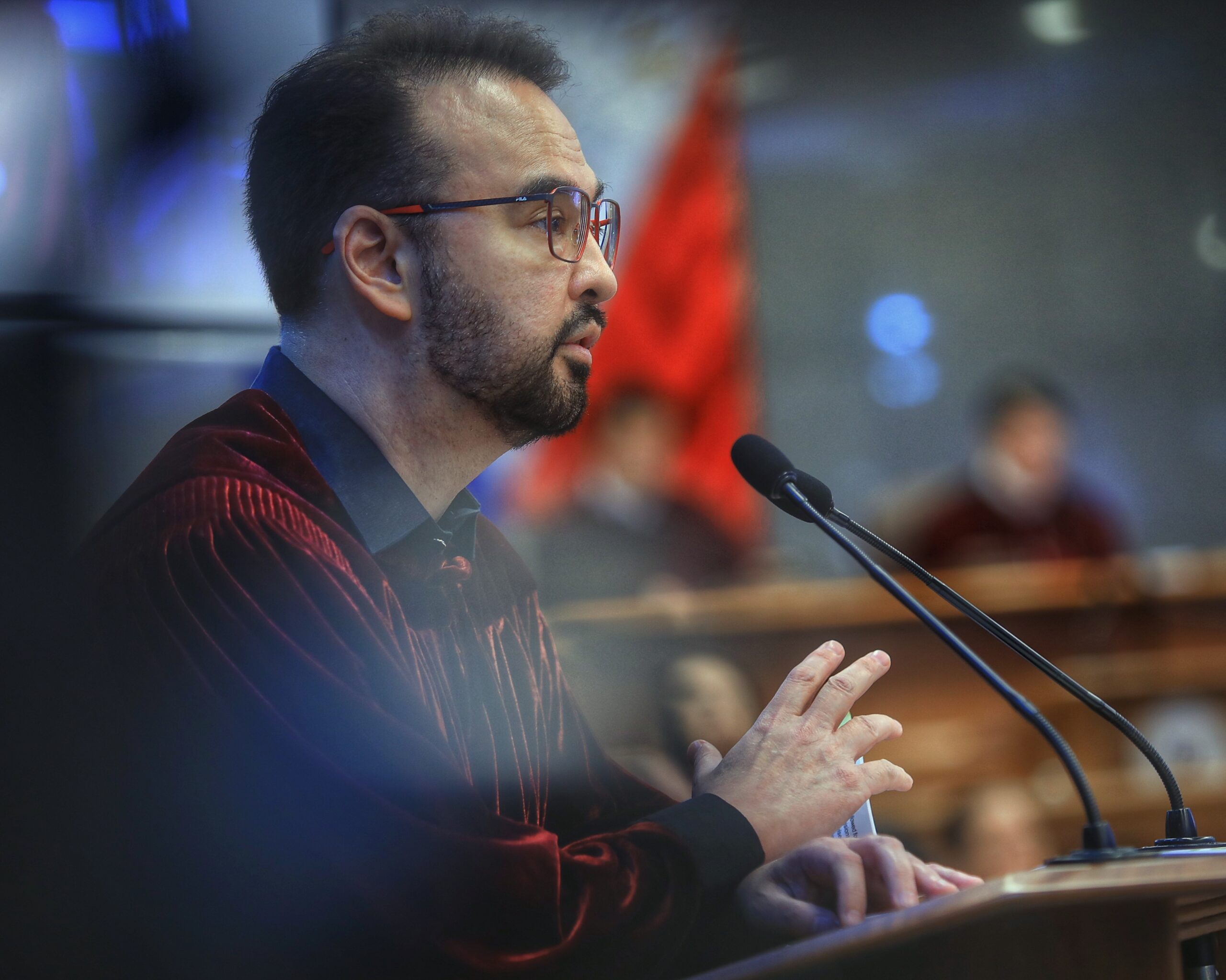
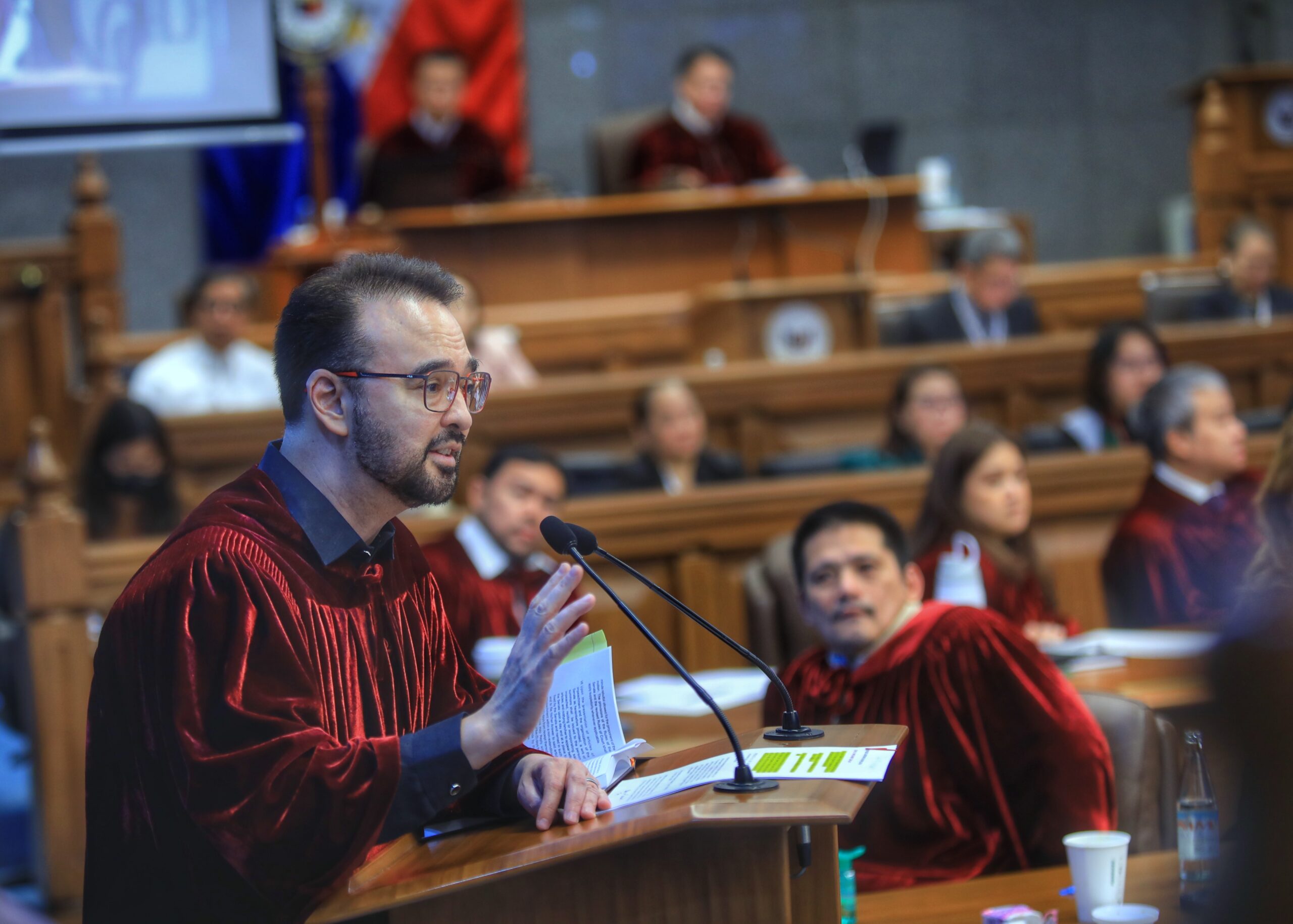
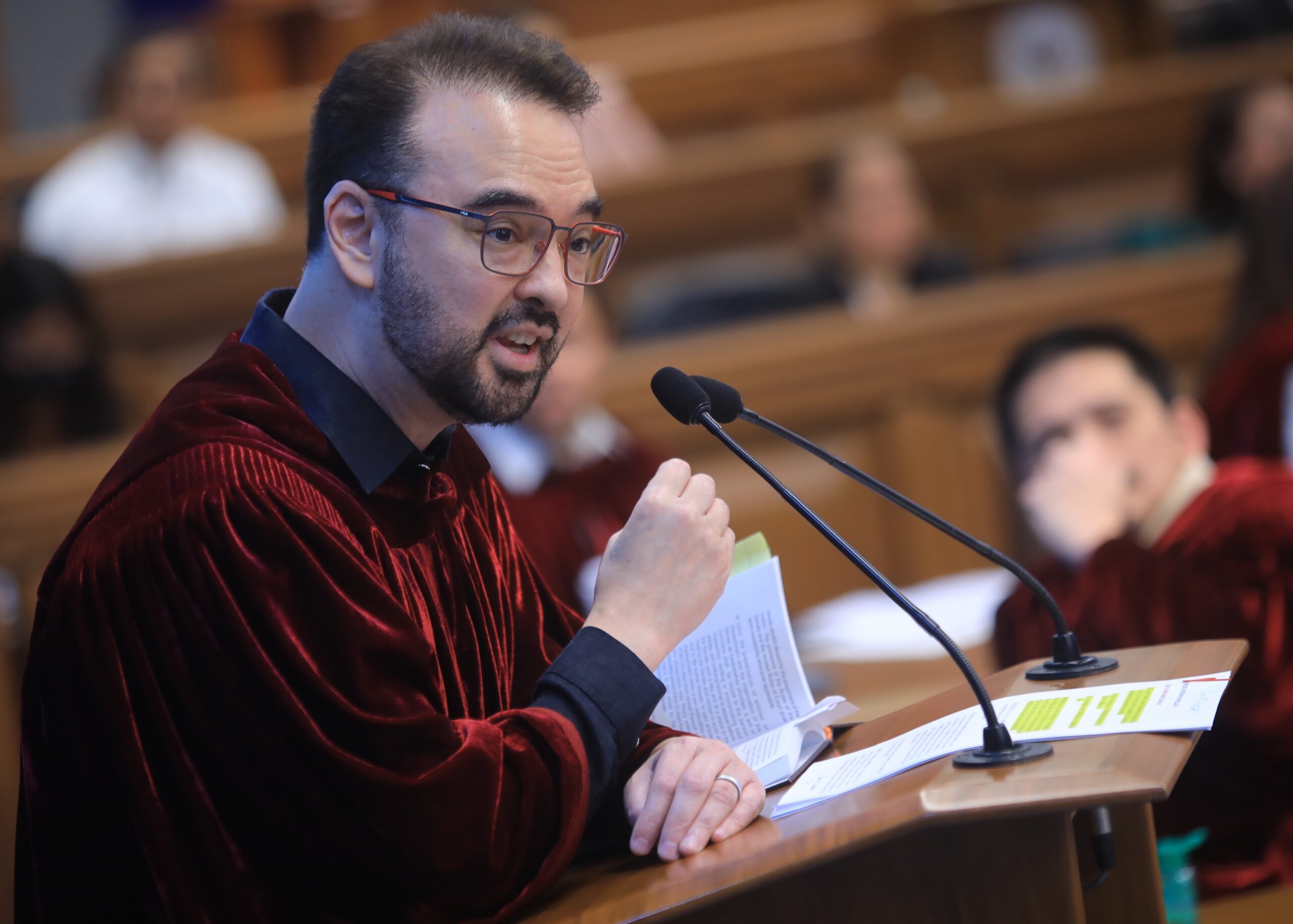
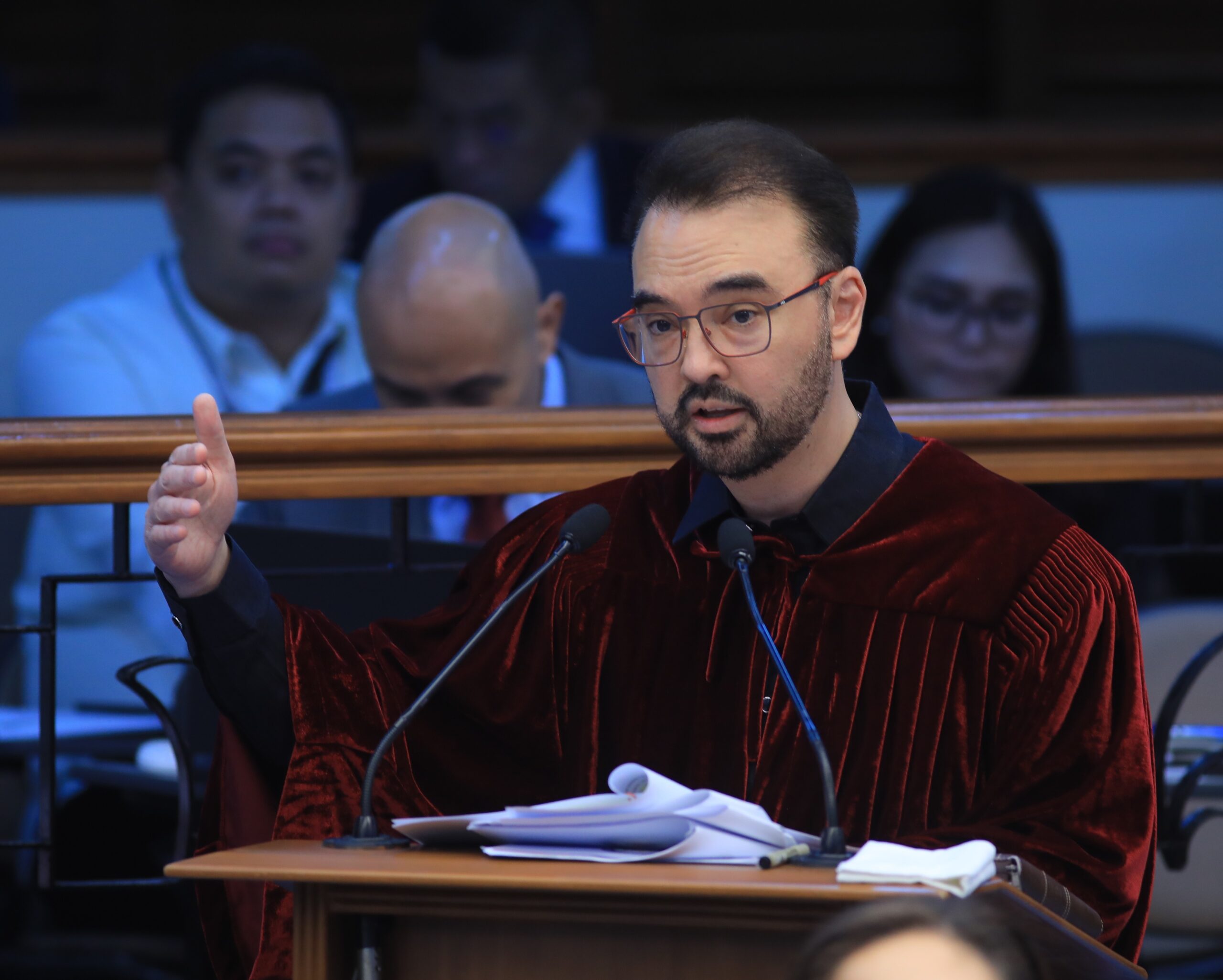
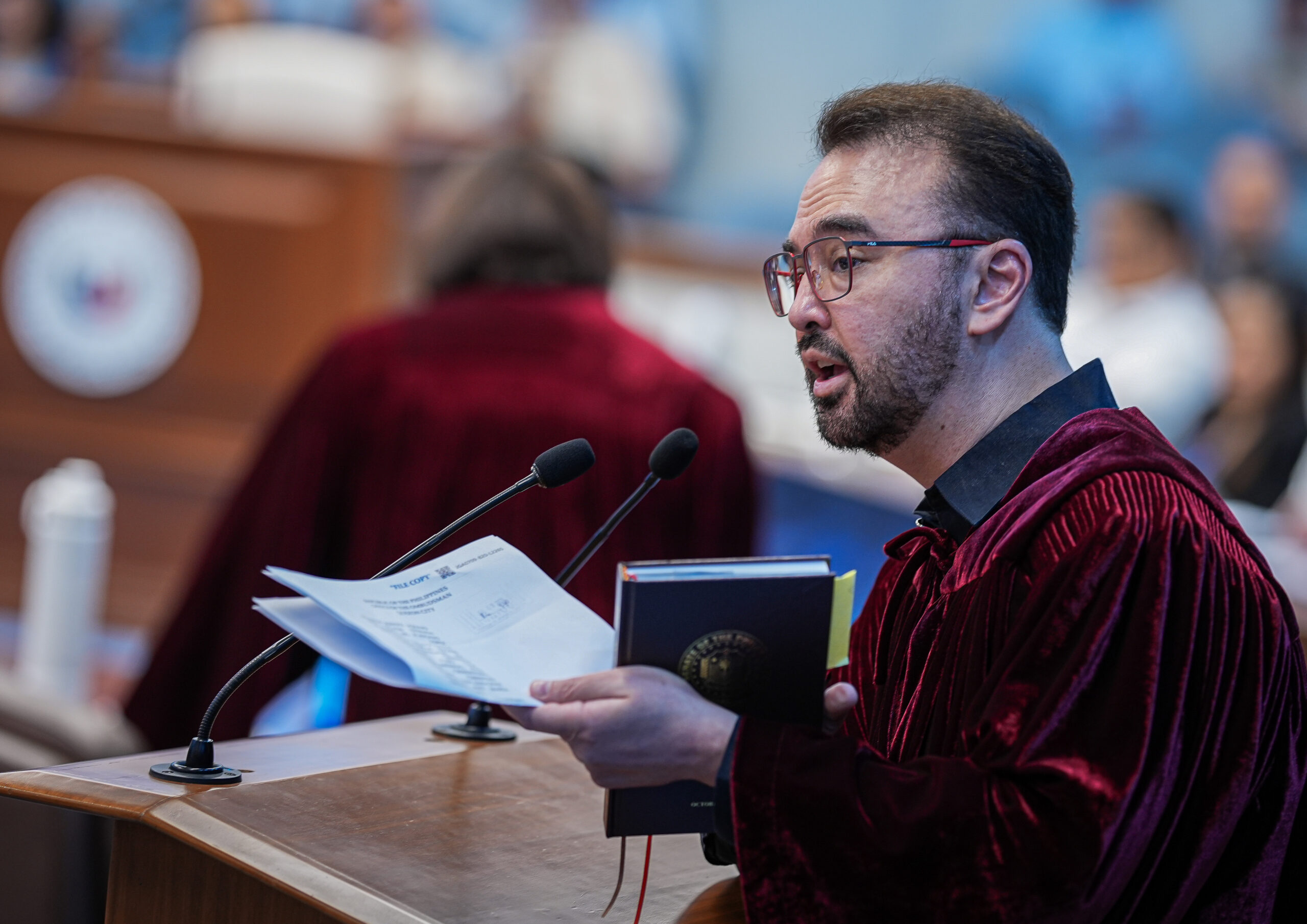
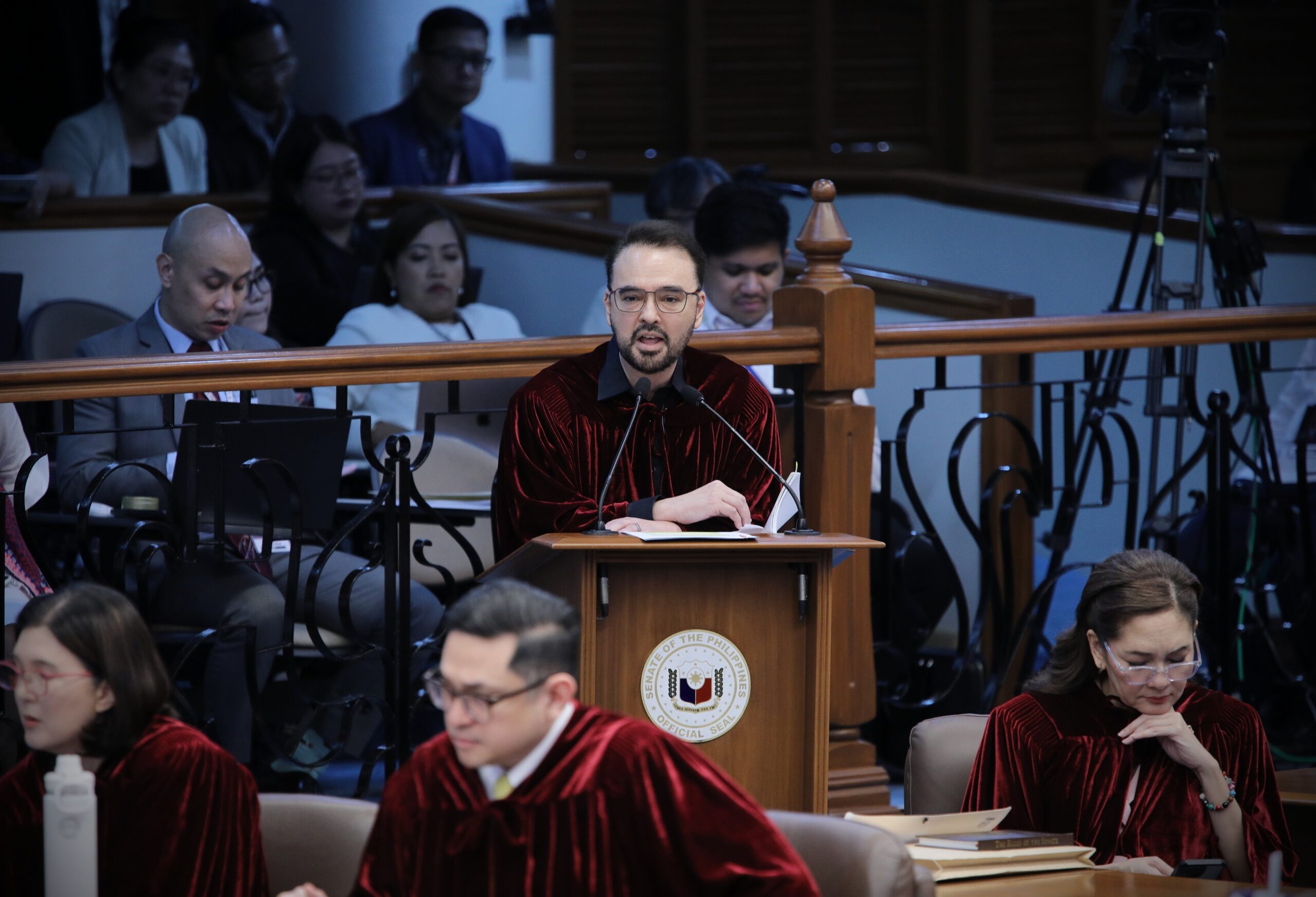
(0:00) I would now recognize Senator Judge Alan Cayetano for his interjection and questions. You may proceed, sir, when you’re ready.
SENATOR-JUDGE ALAN PETER CAYETANO:
(0:08) Before I ask questions, Mr. Presiding Officer, may I thank you, the Senate President Win Gatchalian, former Senate President Tito Sotto, and the whole court, because in our caucus, you did three things.
(0:22) One, you allowed us to have the weekend to review all of the laws so that we can ask more intelligent questions. Two, you allowed to hear the discussions, mostly by Senator Pia, Senator Panglinan, Senator Lacson, and former (Senate President) Senator Sotto. And then number three, we discussed how a complex – what word did you use a while ago, Mr. Presiding Officer, that it’s two motions, but there are…
PRESIDING OFFICER ESCUDERO:
(0:57) There may be issues underneath.
SENATOR-JUDGE ALAN PETER CAYETANO:
(0:59) Issues and sub-issues. So that after we ask questions and after you make a ruling, instead of asking for a division of the House just in case we do not agree, I’ll make a manifestation and then if others agree on how we can manifest or submit in writing in what parts of the ruling we agree or disagree for the record. May I proceed, Mr. President?
PRESIDING OFFICER ESCUDERO:
(1:25) Duly noted, Your Honor, you may proceed, sir.
SENATOR-JUDGE ALAN PETER CAYETANO:
(1:28) Good afternoon, Attorney Diokno and Attorney Poa. So I really want to be enlightened. I have no illusion na magkakasundo yung dalawang side today because we have the eloquent Attorney Diokno on one side and the eloquent No Joke, No Joke on the other side. So sa pangalan palang baliktad na. But I think the discussions are very important and I do appreciate your opening, Congressman Diokno.
(1:58) I appreciate your oral arguments because I’ve been pondering these questions. What if, hindi ko na sasabihin in this administration, let’s say in future administrations, this exact thing happens. Five years, three years, ten years, iba ang SALN, iba ang income ng COA chairman or ng ombudsman, ombudsman files cases.
(2:27) Many, mukhang maraming congressman makakasuhan ngayon. So very, very much relevant yung ating pinag-uusapan ngayon. Just in the spirit of liberality, same kay Senator Pia, after one answers, if one wants to make a quick rebuttal, I’ll ask you the question but let’s try to be concise.
(2:45) So Counsel, may I ask, let’s start with the case of Duterte versus House of Representatives. Thank you for reminding us about certain precedents and how I voted last time. But you would agree, di ba, that when you have legal proceedings, even in legislation, you follow what the latest law is.
(3:05) So for example, if you’re allowed to issue a general warrant before Stonehill versus Diokno, but after Stonehill versus Diokno, may, so if before Stonehill versus Diokno, walang doctrine of the fruit of the poisonous tree, then some policemen will still submit evidence that was illegally acquired. But after that, we have to follow. So you did make your point about Obiter Dictum, I’ll go to that.
(3:32) But I just wanna start out by saying that the fact is there is a Duterte versus House of Representatives. So with your permission, let’s start discussing that. So this case of Duterte versus House of Representatives came out after the impeachment of C.J. Corona, correct?
PROSECUTOR DIOKNO:
(3:51) Yes, Your Honor.
SENATOR-JUDGE ALAN PETER CAYETANO:
(3:52) And the two elements was discussed in this case: The act charged must be impeachable under Article 11, Paragraph 2 of the Constitution; and 2, the act committed must be committed during the term of the impeachable officer. You commented on that, can you elaborate or give your stand regarding, I think you agree with letter A, right? That the charge must be an impeachable offense. I mean, we all agree on that, right?
(4:21) Well, I would distinguish, Your Honor, please, between what we would call Ratio Decidendi, or the rule in that particular case, and Obiter Dicta, which are side comments or incidental remarks made in the opinion of the court. If we are speaking of the Ratio Decidendi of the Duterte versus House of Representatives case, I would have to disagree that it relates to the statements that you mentioned.
(4:46) My understanding of that case is it really relates to the first mode of impeachment and the procedures that must be followed, the one-year ban provided in the Constitution, how that will be applied when impeachment complaints are filed by at least one-third of the members of the House of Representatives.
(5:04) Yung pong nabanggit nila the basis of any charge must relate to the incumbency of the official. In my view, that is Obiter Dicta, not necessary for the decision of the case.
SENATOR-JUDGE ALAN PETER CAYETANO:
(5:15) I appreciate your answer. We’ll go to that. But regardless of the Duterte versus House of Representatives ruling, we do agree with Letter A. The act charged must be an impeachable offense under Article 11, [Paragraph 2] of the Constitution.
PROSECUTOR DIOKNO:
(5:28) I would agree, but if I may be allowed to just qualify that.
SENATOR-JUDGE ALAN PETER CAYETANO:
(5:31) No, this is just a general, this is not a trap question. So the officer has to be impeachable, and the act charged should be an impeachable offense. And since you have betrayal of public trust, that’s quite broad.
(5:45) So this is not a trap question, this is just laying the basis. But go ahead if you want to comment on that.
PROSECUTOR DIOKNO:
(5:50) Yes, the acts charged must constitute an impeachable offense, and that power to decide what is an impeachable offense is lodged exclusively with this Honorable Court.
SENATOR-JUDGE ALAN PETER CAYETANO:
(6:00) Okay, so you disagree that part of the Ratio Decidendi is the act must be committed during the term of the impeachable officer. Thank you for bringing it up now, because I think all throughout the trial, especially in the articles where we will bring up acts before 2022, this discussion will be relevant. So by discussing this, it will pass upon whether or not including proof like bank records, financial documents, before her term can be inquired into.
(6:47) The prosecution says it cannot, right? Because you believe it’s an Obiter Dictum. I’m just restating, you can say it in your words. You believe that the statement that the act must be committed during the term of the impeachable officer is not the law of the land, it’s an Obiter dictum.
PROSECUTOR DIOKNO:
(7:06) In the first place, if Your Honor, please, that was not the exact statement of the court. The court said the basis of the charge must relate to the incumbency of the impeachable official, which does not rule out the presentation of evidence of acts or omissions that occurred before the person became an impeachable officer.
SENATOR-JUDGE ALAN PETER CAYETANO:
(7:25) So let’s take the judicial notice of the, as you said more eloquently and correctly, that the acts during her term. So can you define, you defined this in your opening statement, but for the sake of this discussion, an Obiter dictum is what?
PROSECUTOR DIOKNO:
(7:43) It’s a side comment, Your Honor, that is not necessary for the resolution of that case.
SENATOR-JUDGE ALAN PETER CAYETANO:
(7:48) Yeah, and I agree with that, and it’s a remark made or opinion expressed by a judge in a decision upon a cause, or it’s a by the way, that is incidentally or collaterally and not directly upon the question before him, or upon a point not necessarily involved in the determination of the cause, or introduced by way of illustration, analogy, or argument, such are not binding precedents, just for the public and for all of us, di ba?
(8:15) So ang sinasabi, yes, there can be a Supreme Court decision, but that part could be an Obiter dictum, meaning hindi yan ang doktrina that will bind us in making decisions, whether it’s issuing the subpoena or admissibility. But are you aware of the Villanueva v. Court of Appeals, GR 142947, March 19, 2002? I won’t take it against both of you if you do not, there are thousands of cases.
(8:45) It talks about what is Obiter dictum. Have you passed on this, both counsels? Yeah, so the prosecution characterized the requirement that the basis of the charge must be for impeachable acts or omissions committed in relation to their office during the current term of impeachable officer as an Obiter dictum.
(9:12) But in the Court of Appeals, Villanueva v. Court of Appeals, in that case the Supreme Court held an adjudication on any point within the issues presented by the case cannot be considered an Obiter dictum, even where the point is only incidentally involved. So we agree if it’s incidental, pwedeng obiter but if it’s on point within the issues, sabi ng Villanueva case, it is not. So long as it is presented and decided in the regular course of the consideration of the case and led up to the final conclusion.
(9:49) Or is a statement as to the matter of which the decision is predicated. The court added that a point expressly decided does not lose its value as a precedent because the disposition of the case is or might have been made on some other ground. And that where a court decides several points, none of such points can be regarded as having the status of a dictum.
(10:12) And one point should not be denied authority merely because another point was and more dwelt on and more fully argued and considered. So going back to the Duterte versus House of Representatives, the requirement that an impeachable act be committed in relation to their office and during the current term was not a remark made by the way. The Supreme Court En Banc laid it down as one of the enumerated principles that due process requires, which is the very ground on which the ruling was predicated.
(10:46) Even if the court also struck down the 2025 impeachment complaint based on the one-year bar, so this is the question. Does it not render the due process requirement laid out as a mere Obiter Dicta or because it’s based on due process, regardless of the mode of initiation, regardless of the mode of how the articles of impeachment got here, isn’t due process still a requirement?
PROSECUTOR DIOKNO:
(11:15) If I may be recognized, Your Honor.
PRESIDING OFFICER ESCUDERO:
(11:16) Counsel for the panel of prosecutors may respond.
PROSECUTOR DIOKNO:
(11:19) Precisely, Your Honor. If a matter is within the issues resolved by the court, then it may not be considered as Obiter Dicta. But if we look at the decision in the case of Duterte versus House of Representatives, ang mismong nangyari po doon ay may naunang dalawang complaints that were endorsed at may sumunod na complaint filed by at least one-third of the members of the House.
(11:44) At yung ang tinutukan ng ating Supreme Court. It was in that context that the Supreme Court made pronouncements about the one-year bar and even about due process. At no time in that case was it ever a fact in issue about the mode of impeachment that is involved in our case today.
(12:07) Ang pinag uusapan po natin dito ay individual complaints that were then referred by the House. What we are discussing here are individual complaints that were then referred by the House to the Committee on Justice, heard by the committee, and then brought back to the plenary and eventually umabot dito through [the] articles of impeachment. So kahit may sinabi ang Supreme Court about impeachable offenses in relation to the charges, kami po’y naniniwala na hindi po yan pumapasok or sumasakop sa issues that were decided in that case.
SENATOR-JUDGE ALAN PETER CAYETANO:
(12:38) I will not argue with you because that is not my job here. I’ll follow the Pia Cayetano style and move to the defense, but just a follow-up question on that. So I respect your belief on that, but my point is the legal principle of due process applied to that mode, is it not logical that it’s the same legal principle on due process even if you use another mode?
PROSECUTOR DIOKNO:
(13:01) First of all, if your honors please, when we speak of due process, of course there are two types: substantive and procedural due process. And when we speak of substantive, we’re talking about protections to life, liberty, and property. Wala naman pong ganun na issue po dito sa atin because office is not a property, we’re not talking about the life or liberty of the respondent.
(13:24) Ang pinag uusapan po dito kung due process ang issue, ay simply fundamental fairness. And I do believe that this proceeding does require fundamental fairness, but at the same time it does not require that this court be hamstrung in terms of how to decide whether an offense is impeachable or not.
(13:49) That power is exclusively given to this court at dapat kayo lang po ang mag desisyon at magpasya kung ano nga ba yun. So when we speak of what is an impeachable offense, may kaugnayan po yan doon sa nabanggit ninyong basis of the charge must relate to the incumbency because in our view, that is really something that each member of this honorable court will have to decide when the time comes.
SENATOR-JUDGE ALAN PETER CAYETANO:
(14:14) Later on, I’ll ask you that question, whether or not, what, if ever, can the Supreme Court decide or what of their pronouncements will be applicable to this court and that. But my point is, if we’re saying that ‘pag ang mode of initiation is by one-third na pumirma deretso, at ang nakalagay don committed in relation to their office during the current term, wouldn’t it be illogical if you use another mode and pwedeng hindi committed in relation to their office and during their current term?
(14:47) I don’t think the Supreme Court would be illogical in saying this is the principle for due process in this mode but not in this other mode.
PROSECUTOR DIOKNO:
(14:57) Even if we assume, Your Honor, that this is not obiter, the statement that the basis of the charge must relate to the incumbency of the impeachable officer, we submit that that still applies and we have satisfied that test. As I mentioned in my opening statement, integrity cannot be divided. Hindi po pwedeng hindi biyak-biyakin ang integridad.
SENATOR-JUDGE ALAN PETER CAYETANO:
(15:22) So on that point, if a President, an Ombudsman, a COA chair who’s, let’s say, 60 years old but he started in government at 20 years old, he can be impeached by something he’s done when he was 20 to 30, not only on what he’s done when he was already an impeachable officer?
PROSECUTOR DIOKNO:
(15:40) If we are speaking about unexplained wealth, Your Honor, I have repeatedly cited the cases of the Supreme Court that provide that we must look from the reckoning of the first day of service of that public official, look at all the income that person has amassed and whether it is manifestly disproportionate to the lawful income that he has reported.
SENATOR-JUDGE ALAN PETER CAYETANO:
(16:02) Yes, I agree in terms of holding that person liable and accountable. But what I’m saying is that let’s say he was a counselor, then he was a customs director, then he was BIR, then he’s now COA. Isn’t the remedy for all these other positions that weren’t impeachable is through the regular courts, regular case build ups, etc.
(16:31) But once you’re an impeachable officer, you’re being held accountable during the term that you are, in fact, an impeachable officer because usually when you’re an impeachable officer, it’s too hard to prosecute you the normal way. Isn’t that the logic there, or you disagree, counsel?
PROSECUTOR DIOKNO:
(16:50) I would have to respectfully disagree. Ang pinag uusapan po natin kasi dito ay betrayal of public trust and I think that it’s very clear that when we speak of betrayal of public trust, essentially, we are looking at whether the public official is fit or unfit to continue in service.
(17:07) Kung siya po ay nakapag ammass ng unexplained wealth noong siya ay vice-mayor o mayor na umaabot sa bilyones, I think that would have a very big impact on the court’s decision, whether that person should continue in office or whether they are fit to have that office.
SENATOR-JUDGE ALAN PETER CAYETANO:
(17:25) As I said…
PRESIDING OFFICER ESCUDERO:
(17:26) With the permission of Senator Judge Alan Cayetano, with your indulgence, sir, a request was conveyed to the presiding officer to declare a very brief break…
(Session suspended)