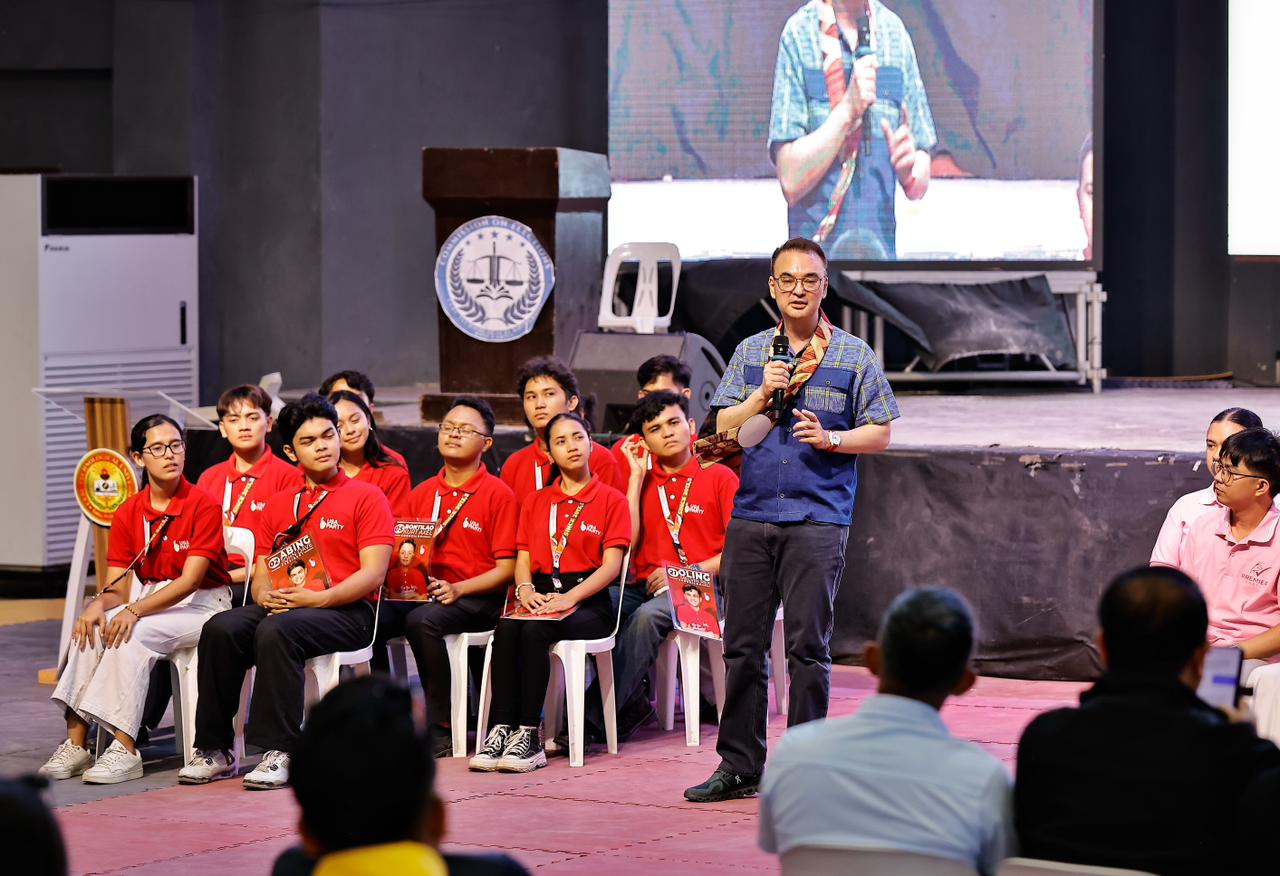
SENATE MINORITY LEADER ALAN PETER CAYETANO:
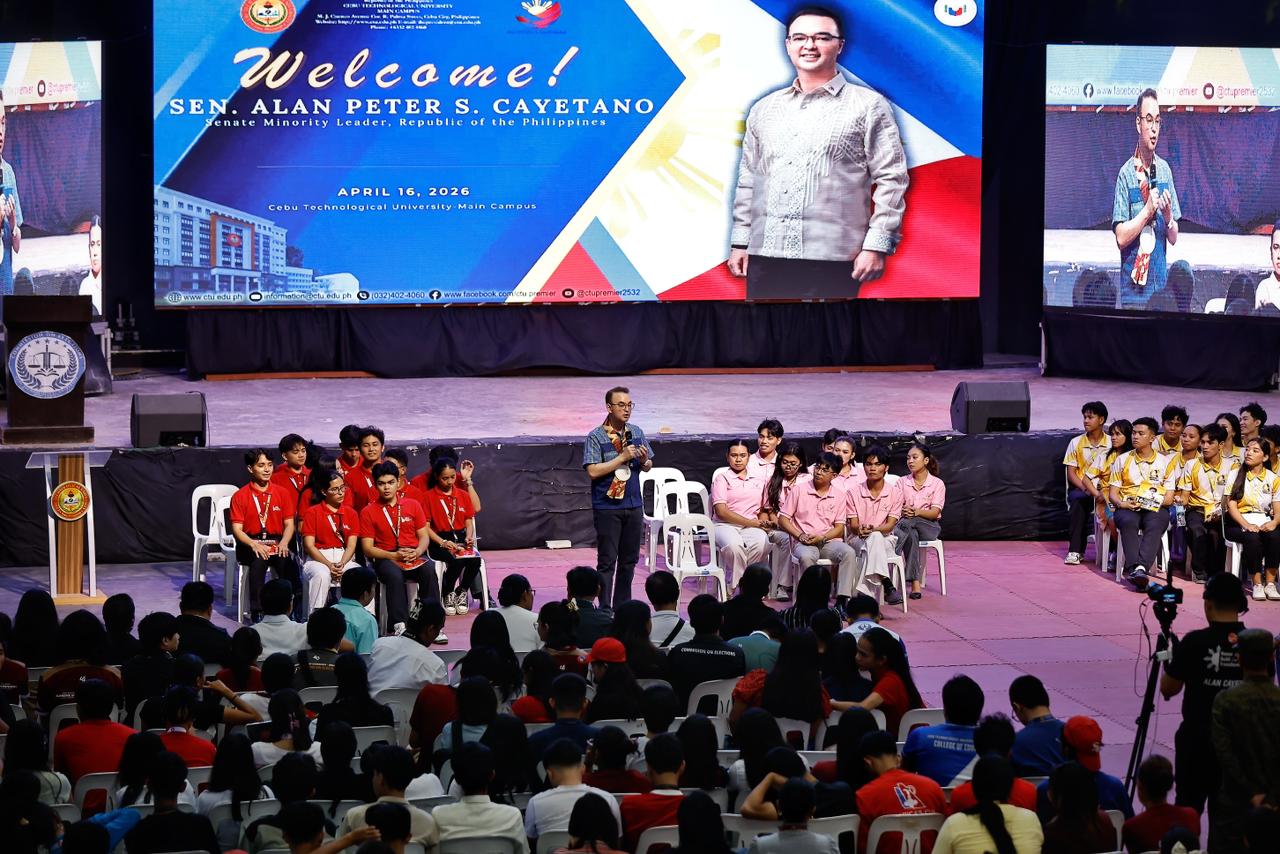
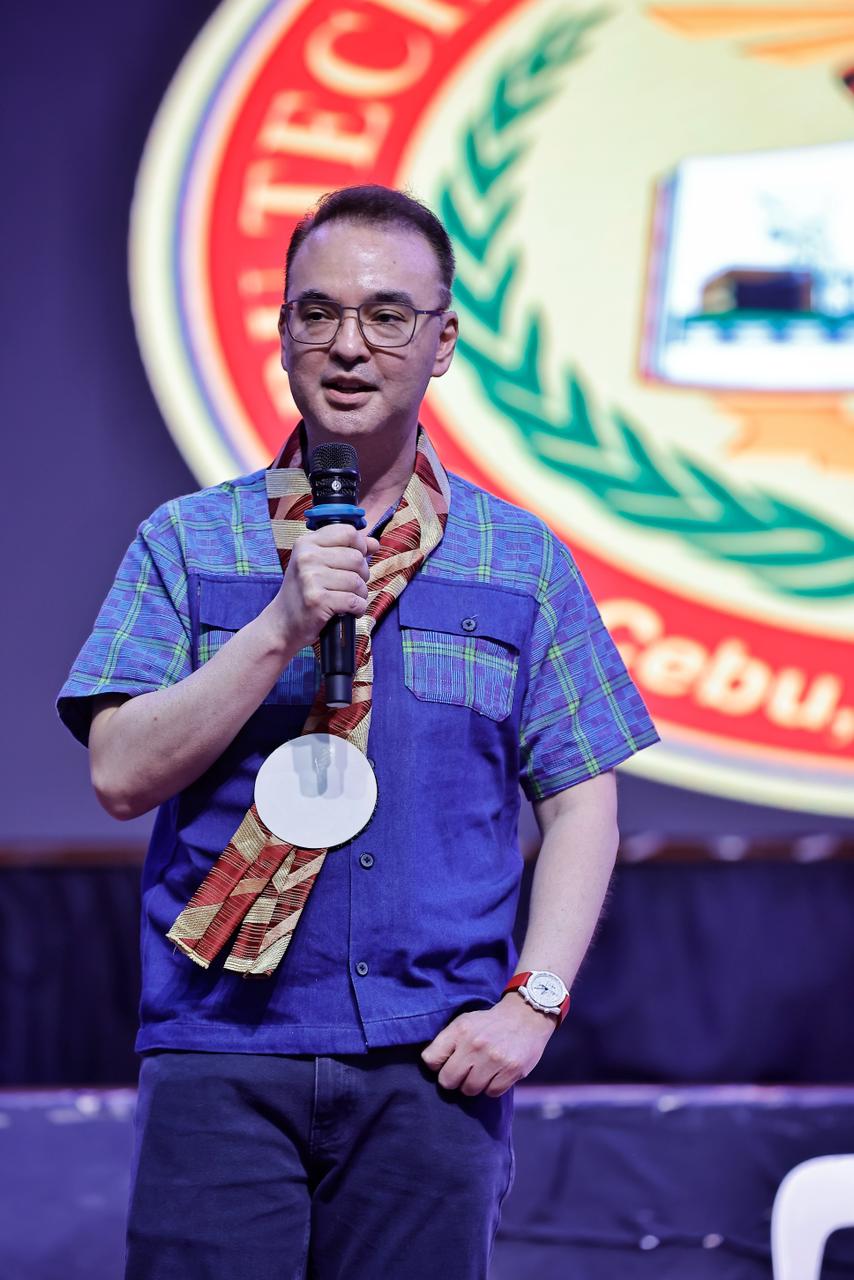
(0:00:00) Maayong hapon sa kaninyong tanan. Kasabot akong Bisaya, dili lang maayo pa magsulti, kinahanglan ng kastoryahan. Kailangan pa ng practice, medyo yung vocabulary kulang pa. So, magandang magandang hapon po. I praise God for the opportunity to be here. The last time I was here, I was chairman of the Committee on Higher Education and naata yung mga pinag-usapan na pangangailangan ng inyong school. So I thought it would be a good gesture to come back just to tell you na in every problem and crisis, may opportunity. So since I’m not chairman anymore, hindi ko na kargo yung buong 111 universities.
(0:00:51) So I asked Ate Loren kung pwedeng yung PUP, ako pa rin ang director. Tapos hiningi ko rin yung CTU. Pero naunahan ako ni Congressman, former Congressman Garcia, na close friend ko. Kasama pa yun sa law office ng dad ko. So I just want to be here to say that I volunteer to continue to help Ma’am Tata, Sir Greg, Sir Romeo, at tanan ng mga board at yung mga advisors natin. Alam niyo po, very, very unique ang inyong age. Pakisabi sa katabi mo, you’re very, very unique. I’ll tell you why. I’ll tell you why. Every generation naman and every person confronts problems and trials and struggles. Diba?
(0:01:48) Tanong sa katabi mo, ano struggle mo? Huwag ka lang sagutin ng ikaw. But, did you notice, right before the pandemic, tignan niyo po yung dami ng crisis, ha?
(0:02:07) Right before the pandemic, it depends if you’re pro or anti Duterte. If you were anti, you would say there’s a human rights crisis. If you’re pro, you would say that there’s a drug and violence crisis. If you’re in the middle, you’ll say there’s both. Okay. And then nagpandemic, which is also a crisis. And then generation niyo, tinamaan yung biggest corruption scandal of our country since our inception, di ba? Yung flood control scandal. And then, right before that, yung Ukraine. Hindi niyo naramdaman masyado, but since World War II,
(0:02:48) Hindi na pa masyadong pinag-uusapan. It seems to be small wars. Pero the Ukraine-Russia conflict gave us a glimpse na we’re all interconnected. So nung dumating itong Iran-US-Israel, yun, biglang ramdam na. ‘Di ba? Mainit pa sa summer. And we’ll talk more about that later. And then we’re facing what some look at as an opportunity, but which some look like a crisis—which is artificial intelligence. ‘Di ba? So what do I mean by that? Usually po, yung dumadaan sa crisis na mga generation, they are stronger generations.
(0:03:33) Ako yung life verse ko, yung Jeremiah 29:11. ‘For I know the plans I have for you, plans to prosper you and not to harm you, plans to give you hope and a future’. Pakisabi nung nasa likod mo naman, may plano ang Diyos sa’yo. ‘Di ba? So I do believe the more trials, the more struggle, the more crises na pinagdadaanan nyo, the bigger the task na hinahanda kayo. If you look at the biblical characters: Moses, Joseph, Daniel, Gideon. Lahat po sila, grabe ang pinagdaanan. Yung pala, hinahanda sila ng Panginoon. Siguro that’s one thing I like about your university kasi you’re sort of in the middle.
(0:04:31) On one hand, you’re technology-oriented, so cutting-edge kayo. Parang advanced na advanced kayo. ‘Di ba? On the other hand, some of you are from the city, some of you are from the province, so some of you kompleto ang gamit, some hindi. Cebuanos are blessed. Most of you know at least three languages. ‘Di ba? English, Tagalog, Bisaya, at…
(0:04:59) Because there are a lot who also came from other places. Yung iba, marunong din mag-ilonggo. Pag Chinese-Filipino ka, edi apat, but most of them were from Phuken. But in the last 20 years, nag-mandarin na rin. So yung iba, five languages ang alam. And many of you may pang-anim dahil nahilig kayo sa K-pop at saka sa K-drama, so marunong na rin kayo mag-Korean, ‘di ba? So what I want to express to you today is something na pinagdaanan namin nung recollection.
(0:05:34) So nung bata kami, napaka-conservative pagka Holy Week, kailangan na sa bahay lang, or may recollection, may retreat. Especially Good Friday. ‘Di ba? And Cebu is even more conservative. Okay? But, siguro mga 20 years ago, dumami na talaga yung nag-a-outing, nagbi-beach, tapos medyo naging affordable mag-abroad. So, I remember…
(0:06:01) Siguro when I was in my 20s, ida-drive ko mom ko around Manila—Good Friday—before 3 o’clock, siguro mga 10 ng umaga, kasi walang traffic eh. Pupunta kami ng Diamond Hotel, ila-lunch ko siya, kaming dalawa lang, wala masyadong tao. Ngayon, fully booked lahat ng hotel sa mga staycation.
(0:06:24) But this year, I felt na parang sabi ko sa asawa ko, parang kailangan natin ng recollection. May kinausap ako ilang tao. Without talking to each other, ang naging topic namin, identity. So I think one of the biggest problems of the Philippines is identity. Hindi pa rin natin kilala kung sino tayo. Look at the news for example.
(0:06:51) Tinitignan ko, recently there was a group [called] Atin Ito who came to Cebu, to San Carlos to talk. I’ll be very honest with you guys, lalo sa student leaders. Minsan pag pinapakinggan ko yung mga ibang pro-China, parang di naman interest ng Pilipinas yan, interest ng China. But realistically ha, when I listen to the other group, di naman interest din ng Pilipinas yun eh, interest ng Amerika yun eh.
(0:07:20) So it’s okay to be pro-Philippines, but we shouldn’t be anti-America or anti-China. But the problem is, hindi pa independent yung ating identity. Parang kailangan mo kumapit sa isang ate o kuya, o sa isang don or donya, and it’s a choice between the two. It’s not a choice between the two. It’s who you are. I’ll give you another example. Kung dumating ako dyan…
(0:07:48) Hindi niyo ako kilala. Nakita ko sila, Ma’am Tata. Sino ‘to? Pwede ba ako mag-attend doon? Hahanapan ako ng ID. Sino ka? ‘Di ba? But what if I suddenly say, Ma’am, pamangkin ako ng Pangulo. Or Ma’am, ano ako? Protégé ako ni Ma’am Tata. Once nalaman [na] kung sino ka, nagbabago yung lahat, ‘di ba? Nahuli ka ng pulis.
(0:08:18) Kasi naka-tsinelas ka lang, nagda-drive ka ng tricycle. Biglang nung nahuli ka, ikaw pala yung barangay captain dun. Ikaw pala pinakamayaman dun, umiikot ka. Hindi ba nagbabago? But that’s one of our problems. Sometimes we build our identity on our success, on how much money we have. Kung ano yung brand ng relo o ng sapatos na suot natin. Kung anong university ng ating graduate. At tuwang-tuwa po ako sa isang USEC natin ngayon sa DBM. Several years ago, nag-top siya ng bar exam, taga Baguio City siya. So everyone was proud na meron pong nag-top na hindi Ateneo, UP, San Beda, UST, hindi malalaking law school. Takbo yung media sa kanya, in-interview siya, sabi, Ma’am, ano pong feeling niyo na ang nag top [sa Bar] ay hindi taga-Manila.
(0:09:23) Sasagot na sana siya, sinundan pa ng reporter: ‘na ma’am, ang nag-tap ay taga-probinsya’. Ang sagot tuloy niya, ‘excuse me, Baguio City is a city, not a probinsya’. Kasi nga, yung mga reporter ka-age ko, e nung age ko, dalawa lang, Manila or probinsya.
(0:09:43) ‘Di ba? Kahit na mas modern ang Cebu, even in the 80s and 90s, mas maganda yung ugali. Mas maganda yung mga schools, marami. Kasi probinsya kayo, diba? So yun po ang sinasabi kong sense of identity.
(0:10:00) The more I get to know the Lord, the more that I get to know my Creator, and ironically, the more that I get to know that I’m broken, and I have a lot of imperfections, mas alam ko na yung identity ko. So, iiwanan ko lang kayo ng isang thought. Si Gideon, sa story po sa Bible, yung Midianites, parati silang talo. And ang gagawin ng Midianites, hihintayin lang mamunga yung kanilang mga tanim. Pagka-inani nila, mag-i-invade sila, kukunin nila most of yung ani. So ang ginawa ng tropa nila Gideon, pagkakuha ng ani sa loob ng cave, hinihiwalay.
(0:10:51) Kasi pag dun sa farm, hinahangin, nakikita ng Midianites na inaani na, a-atakihin na sila. So, bakit sila nasa cave? Nagtatago. Nagtatago ba yung matapang? Sino nagtatago? Usually yung natatakot. ‘Di ba? Pag wala akong kasalanan at tinawag ako ng asawa ko, mayabang akong pumunta doon. Pag may asawa ko, na ako mali, or kung bata ka, ikaw mali, nagtatago kasi mali ka. Okay. When the angel appeared before Gideon, ang sabi ng angel, I was sent to talk to you, mighty warrior. Mighty warrior. I don’t know kung sinong mananalo sa inyo. But assuming, today was the election and one of you had the lowest number of votes.
(0:11:54) But nung kinamayan ko kayo, sabi ko, I don’t know why I have a sense you will be the best politician here in school in Cebu. What would you feel? Kuya Alan, hindi mo ata nakita yung memo, hindi mo ata nakita yung newsletter. Talo ako yesterday. Ako ang pinakamababa. But what we didn’t see is God saw into him, pero siya hindi niya makita. Sa salamin, takot siya eh.
(0:12:23) Sa salamin, hindi siya warrior. Survivor lang siya. Pero nung sinabi nung angel sa kaniya, mighty warrior, he had now a choice. So as Filipinos, as Cebuanos, as members of this great university, you have a choice. Will you be a mighty warrior? Will you be the mighty innovators?
(0:12:47) So, ito lang iwan ko sa inyo ha. [Nag]babasa ako ng mga dyaryo. Thousands of jobs baka mawala sa Pilipinas because of AI. Maraming kumpanya magsasara. After the POGO left, paano yan? Baka umalis call [center]. Panay negative eh. Panay negative about AI. Okay lang yun kung buong mundo ganun kasi baka totoo.
(0:13:09) And then nabasa ko yung statement ni Prime Minister Modi ng India. Ang sabi ng Prime Minister ng India, this AI will even build up more millionaires and billionaires than before. And remember, nung yumaman ang India, pinakamaraming millionaires at billionaires sa buong mundo sa short period of time sa India. India then China.
(0:13:36) Tapos ano sabi ni Modi? This will create thousands or hundreds of thousands of high quality jobs. So both of them looking at the same thing. One of them saw opportunity. The other one saw defeat. So bakit? Ang India hindi din ganun ka-perfect ka. Marami ng yumaman, marami ng maganda, pero pupunta ka sa ibang lugar nila, napakahirap.
(0:14:05) Kung sa Pilipinas may matapobre pa, sila meron pa rin lugar may caste system. Yung caste system ay institutionalized, religious, socio-economic na matapobre. ‘Di ba? Pero sila, may identity sila. Magaling kami dyan sa negosyo. Hindi na kami nagko-call center na language lang kasi high-tech kami. Bakit tayong Pilipino hindi natin mahanap yung ating identity?
(0:14:34) I guess that’s why I love going to universities. Because yung inyong enthusiasm… nandiyan minsan yung doubt, pero natatapatan ng excitement. Nandiyan minsan yung depression, pero the next day you get up and say, kaya ko ito eh, ‘di ba? Pero medyo pag may edad na, minsan nagfo-fall, naniniwala sa tinatawag na lying spirit. Yung nagsasabi sa’yo, wala ka, hindi mo kaya yan, kumopya ka na lang, gumaya ka na lang. So I’ll stop there, but I just want to encourage you, students, please vote. Pick the leaders that you want and that can lead you into the next chapter. And then, isa lang siguro request ko, let’s debate on everything. Pero when we talk about how we will not only survive, but defeat this crisis, dapat nagkakaisa tayo. ‘Di ba? Can you imagine one family?
(0:15:36) I remember in the 80s, madalas ako dito sa Cebu eh. I was off high school. May kaibigan kasi kaming pamilya dito. So dito ako pinapayagan ng dad ko. Wala pang tao masyado sa Mactan. At saka sa Manila kasi bawal ako mag-party-party. Tapos 11:30 [or] 12 na sa bahay [na]. Ang Cebu ma’am, may ano kayo nun eh? Afternoon Disco. Diyan sa boom at saka bye. O ‘di ba? So…
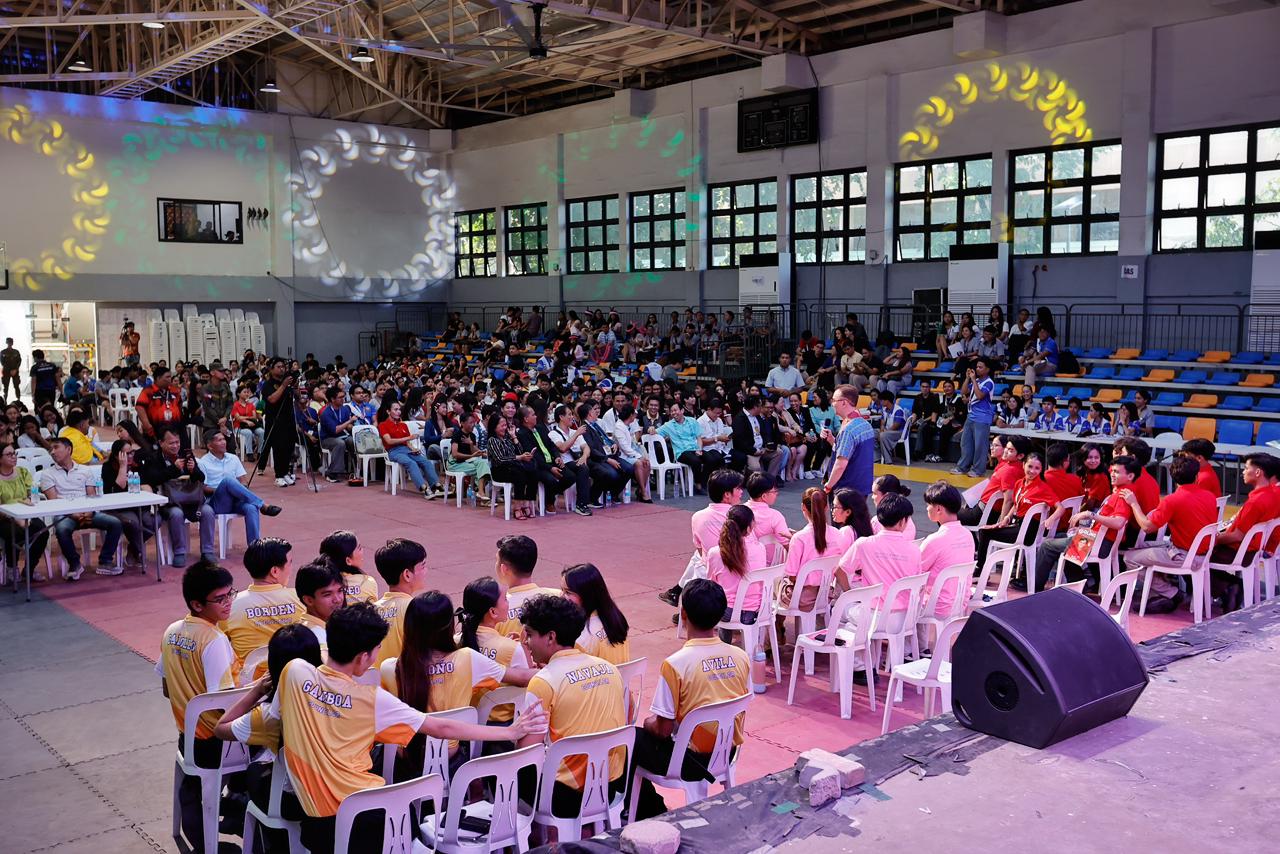
(0:16:04) Naging Indian, naging Bumbay. Pero, you know, the thing about the resilience ng Cebuano is you find a way na magkaisa. Kahit na grabe yung mga diperensya, nawala ngayon yun. Parang ‘pag dito ako, dito ka. So, hopefully yung red, yung pink, yung yellow, is just a guide para may choice kayo. Pero after the election, ipaghalo-halo niyo ulit lahat ng mga kulay na yan. Maayong hapon, daghan salamat po.
EMCEE:
(0:16:43) Yes, that’s right. Students, listen to your Kuya Alan, or should I say, Senator Alan Peter Cayetano, and exercise your rights to vote. Now…
(0:16:57) Thank you very much, Senator, for that powerful reminder that true leadership is about pamumuno. Filling the gaps where there is need. But before we let you go, Senator, we actually… I actually have something…
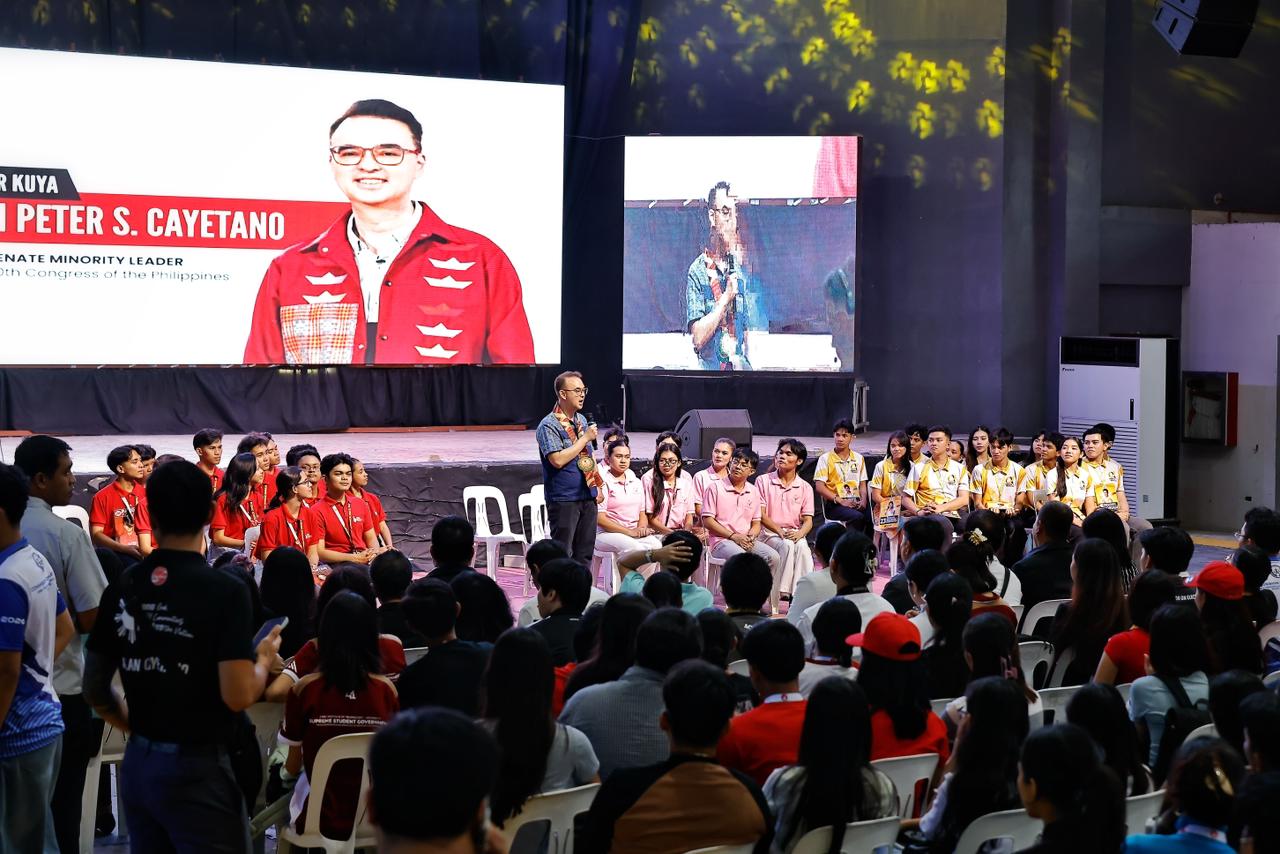
(0:17:12) Something to tell the students here. We are glad enough to have our senator here agree to a brief Q&A session. So, giving the student body a chance to ask their questions to our dear senator here. So, why not go at the back and look for some students who are eager to ask these questions? Do I see hands? Can I see raised hands? Okay, multiple hands. Multiple hands? Let’s start here first. Left side.
(0:17:44) Okay. Left side. From the College of Education.
STUDENT JOHN ANTHONY CONCHA:
(0:17:58) First, sir, I’d like to thank you po for gracing us [with] your presence here in our premier university. And my question is regarding about you being a vocal advocate for restoring the budget cuts sa mga state universities and colleges. So, para sa universidad kagaya ng CTU na may maraming satellite campuses, ano po bang capital outlay projects po ba ang sa tingin nyo ang dapat ifocus o kailangan bigyan ng critical na atensyon para sa 2026 digital infrastructure and physical classroom expansion?
SENATE MINORITY LEADER ALAN PETER CAYETANO:
(0:18:46) So, first of all, let me congratulate you. That’s a very essential question. Ang kamay lang na problema, medyo complex siyang sagutin. But let me tell you this. I’ll give you na lang insights, okay?
(0:19:05) When I was a young congressman, last term ko sa congress, ang budget ng DPWH was 50 billion pesos. Tanan na yun, buong DPWH, 50 billion, five-zero billion. Last year, ang budget ng DPWH was 1.1 trillion pesos. So question, naabang pera? Daghan. Ang problema natin, prioritization. So the first insight I want to give you is [that] there’s a lot of money. The question is, are we using it wisely? Okay. The second one that I’d like to emphasize is, in the different political… PolScie (Political Science), ako by training. Two reasons. One, hilig ko talaga. And two, mahina ako sa math.
(0:20:02) So, nag-HRM ako, akala ko [ang] ko-konti [ng] math. Kompleto pala yun ng statistics, kung ano-anong math, may biology, kasi kailangan pala, alam mo lahat yun, chemistry, etc. So, sa PolScie nun, less math except for the research. And, you know, in my…
(0:20:27) I started in politics 21 years old, 1992, as a counselor sa Taguig. Sa pag-aaral ko ng politics, ang problema [ay] empowerment: walang power talaga ang tao in deciding saan mapupunta ang pera. There are pressure points, but look at last year.
(0:20:50) Dahil may flood control scam, everyone wanted tanggalin na lang yung pondo sa flood control. Yun ang sigaw eh. So the easiest things to do for politicians is tanggalin yung 400 billion for flood control. Anong problema? Ang problema hindi yung pondo sa flood control. Ang problema, corruption. So nilipat yung pondo, God forbid, ba’t tingin ko may malalaking baha tayo this year.
(0:21:21) Kasi kung yung last year nga, malaki ang baha, tapos wala kang bagong flood control. So the problem is we take shortcuts, so we’re not really empowered in deciding where the money will go. I’ll give you an example. The city of Taguig, when Lani—my wife—became mayor in 2010, ang budget was $2 billion.
(0:21:44) Ang utang was 1.9 billion, the mayor bought 100 million worth of basurahans, and scholarship was 5 million. So Lani said, pag naging mayor ako, I will lipat 100 of the 500 million panghakot ng basura, or 600 million ata, 550 million, to scholarships. So now, in Taguig, so when she left, 10 billion income, walang utang, every single graduate ng high school got from 15,000 to 50 to 80,000. We’re increasing that this year. This year, ang budget ng Taguig is 26 billion.
(0:22:26) May konting utang, but nag-grow yung mga program. Why? Tamang priorities, tulungan ng tao, tanggal ng corruption, but empowered din yung mga tao. So, I know I answered the what, pero alam ko yung sa likod ng question mo is, how do we change? How do we change?
(0:22:51) Well, one, the way we changed in Taguig, we informed everyone. So I went to a gathering like this, teachers lahat. Yung pangutana ko sa kanila, kasabot ba kayo kung pila ang budget ng school board? Sagot nila, dili nila alam. So pangutana kong pangduha.
(0:23:13) Kung hatag ako sa inyo ng 100 million para sa school building, okay ba? Palakpakan lahat. Palakpakan. Sabi ko, bakit kayo nagpapalakpakan? Alam nIyo ba ang pera ng school board? 2 billion. Ano ang 100 million? You see my point?
(0:23:29) So if I was Speaker or Senate President, Chairman ng Appropriations, I can go here and say, ang CTU, Ma’am Tata, ang budget karun taon, 200 million. Next year, 300 million. Palapakan. Yun pala, I can give you 1 billion. O yun pala kung saan-saan pala napupunta. ‘Di ba? So hindi po sayang yung oras to be informed.
(0:23:54) Not to fact check to know. Because the more we know, the more you know, the less discretion we have. So pagkahuman nito, magstoryahan kami. Kung di nila alam, di nila kasabot magkano budget, konti lang sabihin ko, palapakan na. So I hope I gave you some proper insight sa tanong mo.
EMCEE:
(0:24:20) Thank you so much, Senator.
SENATE MINORITY LEADER ALAN PETER CAYETANO:
(0:24:23) But the quick answer is, yes, we can add money, mali prioritization, but there’s a lot of money. 6.8 trillion is not a small budget.
EMCEE:
(0:24:35) Alright, thank you so much, Senator, for that wonderful answer. Now, before I proceed to the second student to ask their question, I’d like to ask her, what’s your name, college, program, and then if you have an organization, please feel free to state it.
STUDENT JOHN ANTHONY CONCHA:
(0:24:53) I’m John Anthony Concha po pala from College of Education, taking Bachelor of Special Needs Education. And I am also a proud member of Students Association for Special Education.
EMCEE:
(0:25:09) Thank you so much, Sir John. Now, over here, we actually have another student who’s willing to raise a question. Now, Miss, if you would, can you please state your name, college, program, and if you have, the organization that you’re affiliated with.
STUDENT RICEL MAE EDULLANTES:
(0:25:26) Good afternoon, sir. It’s an honor to have you here today with us. I am Ricel Mae Edullantes from the College of Arts and Sciences currently taking a Bachelor of Arts in English Language across professions and I am also a member of the CTU Main Campus League of English Majors. The question I would love to ask is in line with your advocacy for the digital infrastructure, how do you envision CTU evolving into a smart university to better serve students in the more remote areas in Cebu?
SENATE MINORITY LEADER ALAN PETER CAYETANO:
(0:26:08) Let me answer your question in general and then specifically. My mother’s American, so I grew up with both cultures, although very humble din yung family niya, kaya more of sa Philippines ay grandparents ko nagbibisita, hindi kami masyadong pumupunta doon. But I was exposed to their learning system, although hindi ako nag-aaral abroad.
(0:26:32) Exposed to their politics like many of us, hindi tayo masyadong European eh. Ang Singapore, Hong Kong, British colony, mas British. Ang Pilipinas, mas US. So, what I observe is [that] their universities are drivers not only of innovation but also of policy.
(0:26:54) So, look at the C-SPAN or sa internet, ‘di ba? Ang kinu-question ng mga senador doon, yung mga resource people nila, one out of three, one out of four are always professors. And then, if you have the privilege to be there na presidente ka nung university, or if you see what is one of the greatest honors sa Amerika, being able to be the graduation speaker in a big university.
(0:27:27) So whether it’s Steve Jobs, Bill Gates, Warren Buffett, Elon Musk, maraming tinatanggihan yan na speaking engagement. Pero pag-graduation ng malalaking universities, it’s their privilege. So it’s partly because of the, you know, the driving spirit for change ng students, the reputation ng school. But kasi schools represent talaga idealism eh.
(0:27:54) Walang nag-aaral, let’s say kami sa law school, walang nag-aaral tapos sinasabing, pag-grumaduate ako, lalakarin ko sa judge yan. Pagka naging abogado ko, aaregluhin ko yung pulis. Pagka-grumaduate ako, I will represent the pinakamaraming pera and some of them, if not many, are the negative side of society.
(0:28:21) You’re usually idealist. So, as a general answer, I would like to see the day that our universities lead the way in idealism [and] activism, in terms of policy. So, going specifically sa inyo. So, panahon ng agricultural age, sino ang pinaka-importanting universities? Agricultural universities. Kasi nga, agricultural age eh. ‘Di ba?
(0:28:48) O, so panahon ng industrial age. Panahon na age pa. So, industrial age. Pinaka-importante, mga universities, ‘di ba, that are in engineering, etc. Because nga, ganun. All universities are important. I’m just putting emphasis. Anong age ba ngayon? ‘Di ba, information age? ‘Di ba, age ng innovation, technology, AI nga eh.
(0:29:15) So, sino dapat ang nagli-lead niyan? Mga universities na may specialization sa technology. During the darkest days of the pandemic, COVID-19, and I was there because I was speaker nun, and they were asking me to close down Congress. Mag-break muna kami. Sabi ko, hindi pwede. Kailangan makita tayo ng tao na yung gobyerno hindi nagtatago. Kasi pag tayo nagtago, paano sila?
(0:29:46) You know what? We were the first Congress or Parliament in the whole world nag-online session. Sampo [or] kinse lang yung pinapasok ko online. Nauna tayo. Eh, hindi ano yun… hindi pinagisipan. We just wanted to survive, we didn’t think we’d be the first. Then gumaya yung ibang mga parliament.
(0:30:00) So, I’d like to see CTU as a driver of policy, whether in the provincial government, whether to your congressmen and women, whether to your mayors or the whole country. I think after this, I’ll have the privilege to see three of your civil engineers who are all in the top 10, including the top one—the top notcher. So, anong ginagawa ng DPWH ngayon? Kinukuha yung the best of the best.
(0:30:45) So, if any one of the three join, you will have the same question they asked me when I was 27 years old and I joined Congress. Sabi sa akin ng isang reporter, Sir, may mga contractor ka na ba? Kasi gusto kong gumawa ng project sa lugar mo. Sabi ko sa kanya, with all honesty, Sir, wala akong alagang mga contractor. Bago lang ako.
(0:31:10) Tatay ko sabay ma-elect, hindi po nakaupo tatay ko. Yung isa tinalikuran ako sabi niya ‘sige sir, pero magkakaroon ka rin ng alaga’. Sabi naman ng isa, ‘sir may choice ka. Kainin mo yung sistema or kainin ka ng sistema’. So, universities are usually not part of a corrupt system kasi yung idealism, na sa inyo.So the challenge is how do you graduate and change the system rather than graduate and then become part of the system then look back at your university. I’m from UP, so UP graduates are all very proud. But if you look at most of our leaders, they’re from UP.
(0:32:01) So that means most of our problems also came from UP. ‘Di ba? But we don’t highlight that. So if you look at the budget of UP and you take the top 10 universities, mas malaki pa rin yung sa UP. Pero most of the problems came from UP. Example lang yun ah, kinikiliti ko lang [ang] mind niyo.
(0:32:23) So that’s the role. You have to be the burning fire of idealism. But kailangan mag-tulay. Your alumni have to continue to be that factors of change after graduating.
EMCEE:
(0:32:43) Thank you so much, Senator. Now, lastly, we have a third question over here from the back. Okay, sir, before you ask your question, I’d like you to introduce yourself, your name, college, program, and organization, if there’s any.
STUDENT KLEVIN JAY PORIO
(0:33:13) So thank you for your presence here in Cebu Technological University, sir. And before [I] start, let me introduce myself first. I’m Klevin Jay Porio from the student of the College of Computer Informations and Communications Technology Department.
(0:33:33) Pursuing my course of the Bachelor of Industrial Technology, major in Computer Technology, and currently a 4th-year representative from the Philippine Society of Information Technology Students – CTU Main Campus. So my question, as student leaders are often the first responders during campus crisis, how can the Senate help to institutionalize or yung pag-establish ngleadership development programs that bridge the gap between the student governance and professional public service?
SENATE MINORITY LEADER ALAN PETER CAYETANO:
(0:34:25) You know, I really love that question because three weeks ago lang, may konti kaming debate nung asawa ko. Kasi narinig ko from SILG, Secretary Remulla, na sabi niya, kung siya tatanungin, baka dapat i-abolish na yung SK. Kasi maraming problema at hindi naman natututo. That was our actual debate in 2013-2014 when we revised the SK law. So there were three stance. One is to abolish completely. The other one is to keep it as it is. Ko-konti lang yun. Halos wala. And the other one is major reforms. Okay. Ano yung argument ko doon sa wag i-abolish?
(0:35:18) Tinanong ko yung mga gusto mag-abolish, what’s the problem with SK? Sabi nila, nagiging corrupt. So, tinanong kong follow-up question, bakit nagiging corrupt? Kasi tinuturuan ng kapitan, ng mayor, ng congressman, maging corrupt. So, next question ko sa kanila. So, if the student is being taught by the teacher to be corrupt, why will you abolish the student? Why not abolish the teacher? ‘Di ba? Logic lang. Kung yung congressman, mayor, at saka Kapitan ang corrupt, yung next generation ang tatanggalin mo yung programa.
(0:35:56) Okay. Having said that, now that I have a little bit more of insight and hopefully wisdom, after more than 15 years, the same problema, na ayos ng konti nung tinaasan yung age…
(0:36:11) Pero the same problems address us. And kaya may konti kaming argument or discussion ng wife ko, kasi in-emphasize din niya mga problema: Ilan yung nabuntis samantalang ang ba-bata, kayo dapat ang ano diyan; Ilan yung imbes na mag-aral, nag full-time [work] pero hindi rin full-time kasi more barkada than the work. And then basta’t alam niyo na yung mga problema.
(0:36:38) So, to answer your question directly, emphasis prioritization. I think student councils prepare you. It’s a lesson in democracy. It’s a lesson in governance. The earlier we teach, and because we’re an Asian country, for you who has brothers or sisters, bakit tinuturo sa bata, ikaw ang kuya, ha? Responsibilidad mo yung ano. Sa ate ko, yun ang sinasabi niya parate before, nung bata kaming tatlo.
(0:37:10) Sasabihin ng dad ko, ‘Pia ikaw ang ate, you have to look after your brothers.’ That questions leadership. So, dahil kulang lang tayo ng time whether it’s SK, whether it’s the student council, we lack the emphasis, the prioritization, the funds, and the program to actually train you to be leaders. So, we have the training program called student councils called SK, but once you’re elected, bahala na kayo.
(0:37:39) In a sense, it trains you. Kasi kami din eh, nung naging congressman na ako, bahala ka na. And problema, maraming bad influence. So, hinihila ka na talaga sa bad influence.
(0:37:50) But if you ask me, the training programs are important. But programs need resources. It needs money, it needs models, it needs mission, a vision, it needs mentors, etc. So the program is good. Kaya lang nga we take it for granted. I think, honestly, yun ang tingin ko sa mga… The only youth program that is not taken for granted… is in church and in business. In church because they treat everyone same and they do believe, pag walang bagong leaders, mamamatay church natin. Sa business naman, investment mo yung empleyado mo eh. So regardless of age, pag yan ay palpak maano yung ano mo… business.
(0:38:41) Pero any elected young person, siguro ang tingin ng democracy or ng mga tao, eh hindi naman maubusan yan eh. So, okay lang. But on point yung question mo. So to answer it directly, it’s a good program but it needs emphasis, it needs resources. SK and any youth training program including universities. Remember also your power.
(0:39:08) Any other leader that speaks up, usually it’s an interest group. So may karga yan, may hugot, meron yang interest. So if a union speaks up, yung interest nung manggagawa.
(0:39:22) When the State Us (Universities) speak up, yung interest ng State Us. Usually, ang students medyo mas pure. Mas pure ang hinihingi niyan kasi mas malawak pa yung mas idealistic pa yung pag-iisip. So, ako magta-thank you. Thank you for having me. Candidates, pasensya na kayo. Nag-gate-crash ako sa inyong miting de avance. God bless you all. Daghan salamat po sa kaninyong tanan.
EMCEE:
(0:39:48) What a wonderful display of questions and answers from…