Cayetano’s Kontra-SONA: Culture of wrongdoing is holding PH back
Senate Minority Leader Alan Peter Cayetano said lasting progress for the country depends on confronting the wrong values embedded in Philippine society and building a culture that clearly distinguishes right from wrong.
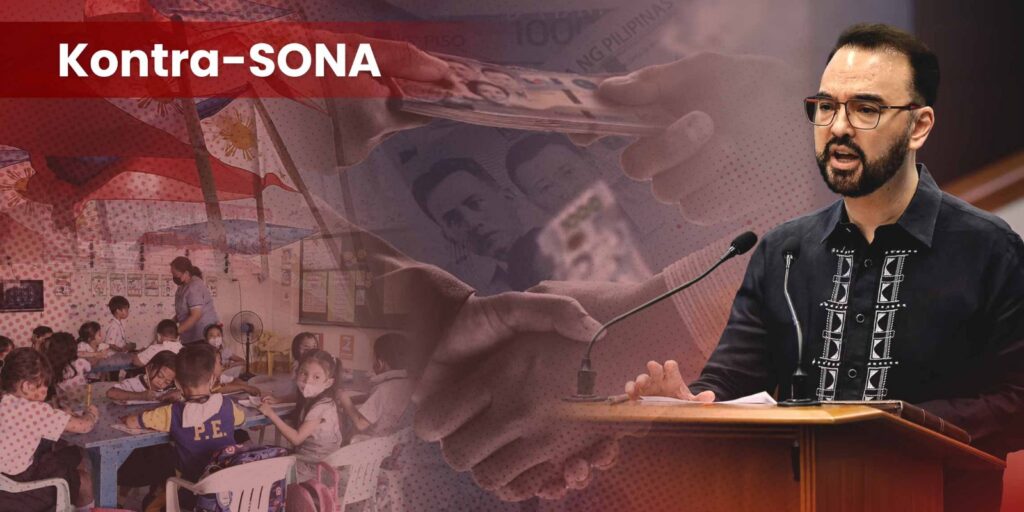
In his Kontra-SONA on July 28, 2026, a day after the President’s State of the Nation Address (SONA), Cayetano asked why the Philippines remains poor despite its rich natural resources, talent, and potential.
“Bakit mahirap ang ating estado? Ano ba ang pumipigil sa ating bansa?” he said. “Ang problema, kultura.”
Cayetano said while values are taught in schools and churches, children learn mainly from what society shows them.
“Children learn by what they see, what they experience, not by what they are taught,” he said.
Cayetano cited corruption as an example of the gap between the values society teaches and the conduct it tolerates.
“We have to address corruption. But we have to address the culture of corruption,” he said.
“Sasabihin natin huwag magnakaw sa flood control pero ina-address ba natin ang pandaraya pag nangongopya sa exam? Ina-address ba natin iyong simpleng pagsisinungaling sa araw-araw?”
He said the same culture is seen in rampant bribery in securing licenses and business permits, paying real property taxes, and dealing with Customs.
Cayetano also cited vaping, which remains accessible to Filipino minors despite its health risks and existing regulations. The 2019 Global Youth Tobacco Survey, he said, found that about one in seven Filipino students aged 13 to 15 were e-cigarette users.
He has long advocated banning vape products in the country, particularly to protect young people from addiction and other health risks.
On children in conflict with the law, Cayetano said certain factors like mental health disorders and being groomed by extremist groups come into play, but families, schools, churches, communities, and government must altogether examine the environment that influenced them.
“In the end, there is a specific blame and there is a general responsibility,” he said.
“That’s a lesson to us, that in everything we do, the children are watching. And they learn from that,” he added.
Filipino Version
Kontra-SONA ni Cayetano: Tamang values ang susi sa pag-unlad ng Pinas
Nakasalalay ang pangmatagalang pag-unlad ng Pilipinas sa pagwaksi sa maling pagpapahalaga o values na nakaugat sa lipunan at sa pagtataguyod ng kulturang malinaw kung ano ang tama at mali.
Ito ang binigyang diin ni Senate Minority Leader Alan Peter Cayetano sa kanyang Kontra-SONA nitong July 28, 2026, isang araw matapos ang State of the Nation Address (SONA) ng Pangulo.
“Bakit mahirap ang ating estado? Ano ba ang pumipigil sa ating bansa?” tanong ni Cayetano. “Ang problema, kultura.”
Diin ni Cayetano, itinuturo man ang tamang asal at pag-uugali sa mga paaralan at simbahan, mas ginagaya pa rin ng mga bata ang nakikita nila sa lipunan.
“Children learn by what they see, what they experience, not by what they are taught,” aniya.
Inihalimbawa ni Cayetano ang laban kontra korapsyon kung saan malayo ang sinasabi ng lipunan sa mga gawaing kinukunsinti nito.
“We have to address corruption. But we have to address the culture of corruption,” wika niya.
“Sasabihin natin huwag magnakaw sa flood control pero ina-address ba natin ang pandaraya pag nangongopya sa exam? Ina-address ba natin iyong simpleng pagsisinungaling sa araw-araw?” dagdag niya.
Makikita rin aniya ito sa talamak pa ring lagayan sa pagkuha ng lisensya at business permit, pagbabayad ng real property tax, at pakikipagtransaksiyon sa iba’t ibang ahensya ng gobyerno.
Muli ring pinuna ni Cayetano ang vaping na hanggang ngayon ay abot-kamay pa rin sa mga menor de edad sa kabila ng panganib nito sa kalusugan at umiiral na regulasyon.
Batay sa 2019 Global Youth Tobacco Survey, halos isa sa bawat pitong Pilipinong mag-aaral na edad 13 hanggang 15 ang gumagamit ng e-cigarettes.
Matagal nang isinusulong ni Cayetano ang pagbabawal sa vape sa bansa upang protektahan ang kabataan laban sa addiction at iba pang panganib nito sa kalusugan.
Tungkol naman sa mga batang nasasangkot sa krimen, sinabi ni Cayetano na bagama’t may mga salik gaya ng mental health disorders o pangmamanipula ng extremist groups, dapat pa ring sama-samang suriin ng mga pamilya, paaralan, simbahan, pamayanan, at pamahalaan ang kapaligirang nakaimpluwensiya sa kanila.
“In the end, there is a specific blame and there is a general responsibility,” ani Cayetano.
“That’s a lesson to us, that in everything we do, the children are watching. And they learn from that,” dagdag niya.
Share This Post